
AI Tools for Small Ecommerce Stores: Complete Guide to Growing Smarter in 2026
AI tools for small ecommerce stores have eliminated the resource gap that once separated solo operators from enterprise competitors in 2026. The same capabilities that major retailers deploy across dedicated teams personalized product recommendations, automated customer support, SEO-optimized content at catalog scale, predictive inventory management are now accessible to a store owner running everything from a single laptop. This guide covers ten essential AI tools across every operational stage, organized as a practical reference for small store operators ready to build a smarter, more automated business.
1. Shopify Magic: Built-In AI Content and Design Generator
Every Shopify store in 2026 already has AI built in. Shopify Magic generates product descriptions from a title and key attributes, writes email subject lines, creates FAQ answers, and produces complete store theme designs from a written brief all inside the Shopify admin without any third-party integration. For small stores just beginning to explore AI tools for small ecommerce stores, Shopify Magic is the zero-friction starting point included in every paid plan at no additional cost. Full capabilities available on the Shopify Magic platform.
2. Klaviyo: AI-Powered Email and SMS Retention Marketing
Klaviyo is the highest-ROI AI tool for small ecommerce stores managing customer retention, with predictive analytics identifying next purchase dates, churn risk, and the optimal send time for each individual subscriber. Its automated flows abandoned cart recovery, welcome sequences, post-purchase upsell, and win-back campaigns run continuously without manual intervention. Nucleus Research confirms a 5.4x ROI multiplier for stores using marketing automation at this level. Free up to 250 contacts. You can explore all AI-powered flow capabilities on the Klaviyo platform.
3. Tidio: AI Customer Support Agent That Handles 70% of Inquiries
Tidio’s Lyro AI agent resolves up to 70% of customer support requests automatically order status checks, return policy questions, product inquiries, and shipping updates across unlimited simultaneous conversations. For small stores where the owner handles every customer email manually, this is the single most time-liberating AI tool for small ecommerce stores available. Real-time product recommendations during support conversations also reduce cart abandonment. Free tier available. Plans start at $29 per month. Full details on the Tidio platform.
4. Describely: Bulk AI Product Description Generator
Describely is purpose-built for catalog-scale product description operations the AI tool for small ecommerce stores that eliminates the manual copywriting bottleneck when stores expand from ten products to one hundred or beyond. Import your product catalog via CSV, enforce your brand voice settings, generate all descriptions simultaneously, and publish directly to Shopify in one click through native two-way sync. Pay-as-you-go pricing at $0.75 per description means you only pay for what you generate rather than committing to a flat monthly subscription regardless of volume.
5. Anyword: Conversion-Scored Ad Copy Generator
Anyword assigns predictive conversion scores to each generated ad headline and description before a single dollar of budget is committed to testing them live. For small store operators who cannot afford to waste advertising spend on underperforming creative, this data-backed headline selection approach reduces average cost per conversion by 18 to 32% compared to manually selected copy at equivalent spend levels. Covers Google Ads, Meta, TikTok, and email subject lines from one platform with audience-segment calibration for each channel.
6. Triple Whale: AI Analytics and Attribution for Growing Stores
Triple Whale solves the attribution problem that small ecommerce stores running Google, Meta, and TikTok simultaneously face each platform claims its own ROAS as the definitive number while the actual blended picture is completely different. Its Moby AI assistant answers natural language questions about store performance directly: “which products have the highest 90-day lifetime value” or “which ad creative drove the most new customers last month” returning specific answers rather than directing you to a dashboard to find the answer yourself. Most valuable for stores spending above $5,000 monthly on advertising where attribution clarity directly impacts profitability.
7. Alia Popups: AI Conversion Rate Optimization for Shopify
Alia Popups is the AI tool for small ecommerce stores specifically focused on converting anonymous site traffic into known email subscribers. Trained on over 500 million popup views, its Autonomous A/B Testing automatically generates variant combinations, measures performance, and scales winning configurations without requiring manual intervention at any stage. Built exclusively for Shopify with native integration requiring no custom development work the setup-to-revenue path is shorter than any competing popup optimization platform.
8. Frase.io: SEO Content Strategy and Blog Generation
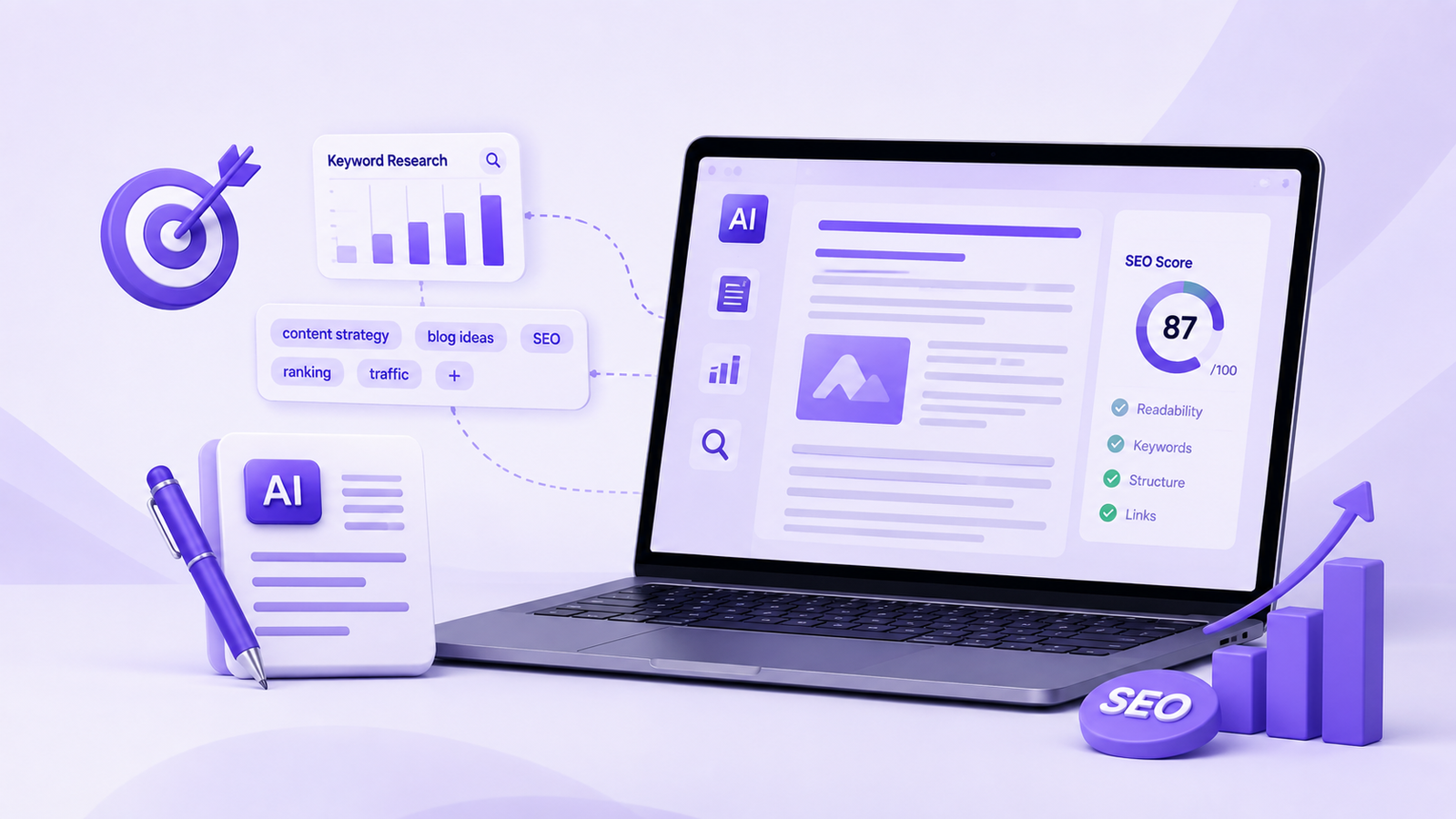
Frase integrates Google Search Console data directly into its content generation workflow producing blog posts, buying guides, and category page content that targets the specific keywords your store’s potential customers are actively searching. For small ecommerce stores building organic traffic as a long-term customer acquisition channel, Frase’s research-to-draft workflow is the most practical AI tool for small ecommerce stores at the $45 per month entry price point. Each article it produces is scored against actual top-ranking competitor pages rather than internal models disconnected from real SERP data.
9. Prisync: AI Competitive Pricing Intelligence
Prisync monitors competitor pricing across your entire product catalog and adjusts your store’s prices automatically based on rules you define maintaining your target margins while staying competitive without manual price monitoring across dozens of competitor stores. For small ecommerce stores in categories where price comparison is a primary purchase driver, margin erosion from competitors undercutting prices often happens before the store owner notices. Prisync prevents that damage automatically. Plans start at $59 per month.
10. Gorgias: Revenue-Generating Customer Service Platform
Gorgias focuses exclusively on ecommerce customer service with AI automation that resolves common inquiries instantly while routing complex cases to human agents with full order and conversation context attached. The revenue angle is what separates it from generic helpdesk tools brands using Gorgias report recovering an average of $38 per automated support ticket through integrated upsell and cross-sell recommendations delivered during issue resolution. For small stores where customer service has always been a cost center, Gorgias reframes it as a revenue channel. Deep Shopify integration shows complete order history alongside every support conversation.
For a complete overview of AI ecommerce platforms covering mid-market and enterprise-grade tools beyond small store requirements, this AI ecommerce tools guide covers the full landscape with pricing and use case recommendations across every store size and operational complexity level.
Building Your AI Stack Strategically
The most profitable small ecommerce stores in 2026 don’t use every AI tool available they build focused stacks where each platform addresses a specific operational bottleneck. Start with customer-facing tools first since they deliver the fastest measurable ROI. Add retention automation second. Layer analytics and attribution third once you have meaningful data to interpret. Add content generation, pricing intelligence, and conversion optimization as your store scales into categories where those specific tools produce measurable lift on the KPIs that matter most to your business model.
Frequently Asked Questions
1. Which AI tools for small ecommerce stores are completely free to start?
Shopify Magic is included in every paid Shopify plan at no additional cost. Klaviyo’s free tier covers stores up to 250 contacts. Tidio’s free tier covers basic chatbot functionality. These three tools together cover content generation, retention marketing, and customer support the three highest-ROI AI categories for small ecommerce stores before any additional monthly investment is required.
2. How many AI tools does a small ecommerce store actually need?
Most profitable small stores run two to four AI tools simultaneously covering distinct workflow stages. Stacking more than five tools typically creates integration overhead and overlapping functionality that reduces overall effectiveness. The highest-performing stacks cover customer support, retention marketing, and either analytics or content generation with additional tools added only when a specific bottleneck justifies the investment against measurable outcomes.
3. When should a small ecommerce store start investing in paid AI tools?
The clearest trigger for paid AI tool investment is when a specific manual process is demonstrably limiting revenue growth. If you’re losing customers to slow support responses, that’s the trigger for Tidio. If you’re spending three hours weekly on email campaigns, that’s the trigger for Klaviyo. If your product descriptions are generic because writing them manually takes too long, that’s the trigger for Describely. Match the tool to the bottleneck rather than investing based on general AI adoption pressure.
4. Do AI tools for small ecommerce stores require technical skills to set up?
Most tools covered in this guide are specifically designed for non-technical store operators. Shopify Magic, Klaviyo, Tidio, and Alia Popups all offer guided setup that works without developer resources. Describely and Anyword both operate through straightforward input interfaces. The tools requiring the most initial configuration Triple Whale for attribution and Frase for content strategy provide onboarding support and setup documentation that non-technical operators navigate successfully within a few hours of initial access.
5. Can AI tools for small ecommerce stores replace human staff?
Tidio and Gorgias automate the majority of routine customer service without human input, genuinely reducing the headcount requirement for support functions at small store scale. Content generation tools reduce the need for freelance copywriters for standard product descriptions and blog posts. However, brand strategy, supplier relationship management, customer experience design, and high-stakes business decisions still require human judgment. AI tools eliminate the repetitive execution layer they don’t replace the strategic thinking that determines whether a store builds a sustainable business or merely processes transactions.

- How to Add Captions to Short Videos That People Actually Read - October 8, 2026
- 10 Step AI Search Content Optimization Checklist - October 6, 2026
- Competitor Visibility Tracker: How to Monitor Search and AI Visibility - August 22, 2026