How to Prevent Deepfakes: A Practical 2026 Guide for Individuals and Organizations
Knowing how to prevent deepfakes has become an essential digital literacy skill in 2026. What was once a niche concern for celebrities and politicians has evolved into a widespread threat affecting everyday people, corporate executives, journalists, and public institutions. Deepfake technology — which uses AI to synthesize convincing fake video, audio, and images of real individuals — has become more accessible, more realistic, and more damaging than at any previous point in history. Understanding how to prevent deepfakes before they harm your reputation, finances, or personal safety is no longer optional. This guide provides actionable, up-to-date strategies for both individuals and organizations.
Why Learning How to Prevent Deepfakes Matters More Than Ever
The scale of the deepfake problem in 2026 is staggering. Synthetic media incidents have been linked to financial fraud, non-consensual intimate imagery, political disinformation campaigns, and corporate espionage. AI video and voice cloning tools that once required thousands of dollars and technical expertise can now be operated by anyone with a smartphone and a subscription.
Preventing deepfakes isn’t just about technology — it’s about behavior, awareness, and putting the right systems in place before an incident occurs. Reactive damage control after a deepfake goes viral is exponentially harder than proactive prevention. The steps outlined here address both the personal and institutional dimensions of this challenge.
Limit Your Publicly Available Biometric Data
The most fundamental way to prevent deepfakes is to reduce the volume of training data available to bad actors. Deepfake models require source material — images, video clips, and audio recordings of the target — to generate convincing synthetic media. The more publicly accessible your face and voice are, the easier you become to clone.
Practical steps to reduce biometric exposure include:
- Auditing your social media profiles and removing or limiting access to high-resolution photo and video content
- Setting all personal accounts to private or friends-only visibility
- Avoiding posting long, uninterrupted video or audio recordings in public spaces
- Using platform privacy settings to prevent facial recognition tagging
- Requesting removal of your content from data broker sites that aggregate public information
This won’t make you immune public figures especially can’t eliminate all source material but it raises the difficulty threshold significantly for anyone attempting to build a synthetic model of your likeness.
How to Prevent Deepfakes With Digital Watermarking and Content Authentication
Content provenance technology has matured significantly by 2026, and it represents one of the most powerful institutional tools available to prevent deepfakes from being mistaken for legitimate content. The Coalition for Content Provenance and Authenticity (C2PA) has developed open standards that embed cryptographic metadata into images and video at the point of creation, making it possible to verify whether content is authentic or synthetically generated.
Organizations producing official video content — press releases, executive communications, product announcements — should implement C2PA-compliant workflows so that authenticated content is immediately distinguishable from manipulated versions. Camera manufacturers, editing software, and major platforms are increasingly supporting this standard natively, making adoption more accessible than ever.
Deploy AI Detection Tools as an Early Warning System
To prevent deepfakes from causing damage within your organization, AI-powered detection tools serve as a critical first line of defense. These systems analyze video and audio for artifacts that indicate synthetic generation — unnatural blinking patterns, lighting inconsistencies, audio-visual sync anomalies, and pixel-level irregularities invisible to the human eye.
Businesses operating in finance, media, legal services, and government should integrate deepfake detection into communication verification workflows. Video calls requesting urgent financial transfers or sensitive authorizations should be flagged for authentication before action is taken. Several enterprise platforms now offer real-time deepfake detection APIs that can be embedded directly into video conferencing infrastructure.
Establish Identity Verification Protocols for High-Stakes Communications
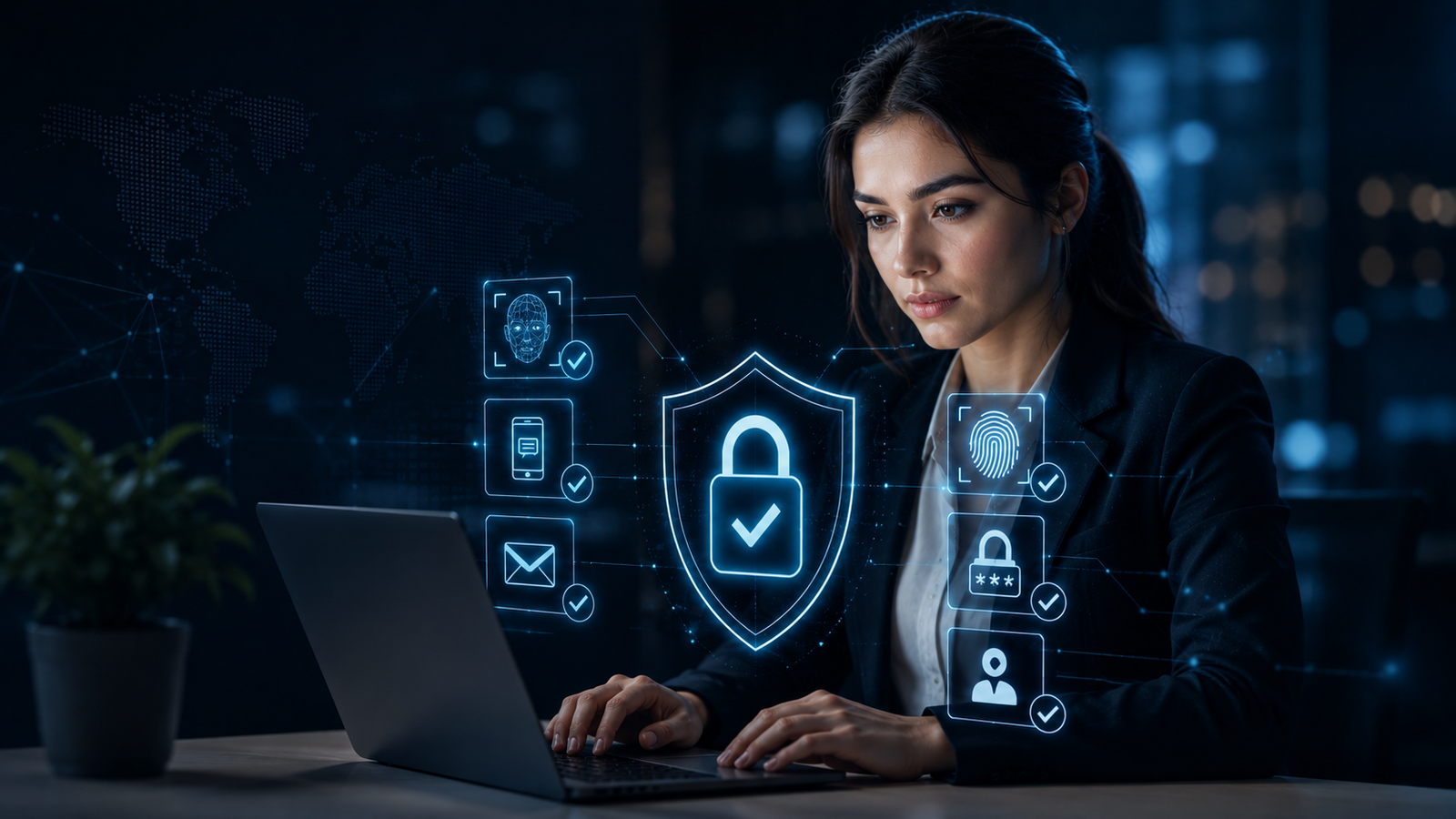
One of the most damaging deepfake attack vectors in 2026 is the synthetic impersonation of executives, clients, or colleagues in video calls or voice messages to authorize fraudulent transactions. Knowing how to prevent deepfakes in this context means building human-layer verification protocols that technology alone cannot bypass.
- Implement pre-agreed verbal codewords for sensitive authorizations that are never shared digitally
- Require dual-channel verification confirm video call requests through a separate, independently authenticated communication channel
- Establish a zero-trust policy for any video or voice-only request involving financial transfers or data access
- Train staff to recognize high-pressure tactics commonly used in deepfake fraud scenarios
These behavioral protocols are resistant to even the most sophisticated synthetic media because they rely on out-of-band confirmation that a deepfake cannot intercept or replicate in real time.
Legal Protections and Reporting Mechanisms in 2026
Understanding how to prevent deepfakes also means knowing your legal recourse when prevention fails. Legislation targeting non-consensual synthetic media has advanced significantly across multiple jurisdictions. In the United States, the NO FAKES Act and state-level deepfake laws provide civil and criminal remedies for victims of malicious synthetic media. The European Union’s AI Act similarly mandates disclosure and watermarking requirements for AI-generated content.
If you discover a deepfake of yourself or your organization in circulation, reporting mechanisms now exist on most major platforms YouTube, TikTok, Meta, and LinkedIn all have dedicated synthetic media removal policies. Document the content thoroughly before reporting, and consult legal counsel if the deepfake constitutes defamation, fraud, or non-consensual intimate imagery.
How Brands Can Prevent Deepfakes From Damaging Their Reputation
Brands face a unique deepfake threat: synthetic video of executives making false statements, fake product endorsements, or fabricated crisis communications can go viral before a correction reaches the same audience. To prevent deepfakes from becoming a reputational crisis, proactive brand protection strategies are essential.
Maintain verified social media accounts across all major platforms with two-factor authentication. Publish a clear, publicly accessible channel verification policy so audiences know where to find official brand communications. Conduct regular monitoring using social listening tools that now include AI-generated content detection as a standard feature.
For a comprehensive breakdown of personal protection strategies against synthetic media attacks, this deepfake protection guide covers individual-level defense tactics tailored for 2026 threat environments.
Media Literacy as a Long-Term Strategy to Prevent Deepfakes
Technology and legal frameworks alone cannot fully prevent deepfakes from spreading because ultimately, it’s human judgment that determines whether synthetic content is believed and shared. Investing in media literacy at an organizational and societal level is one of the most durable long-term defenses available.
Teaching employees, students, and the general public to question the provenance of viral video content, verify sources before sharing, and apply healthy skepticism to emotionally charged or surprising footage directly undermines the social engineering that makes deepfakes effective. According to research published by First Draft News, misinformation spreads fastest when it triggers strong emotional responses — exactly the psychological lever that deepfake creators exploit most aggressively.
Watermark Your Own Content Proactively
Content creators and public figures can take a proactive approach to prevent deepfakes by embedding visible and invisible watermarks into all published media. Visible watermarks deter casual misuse. Invisible forensic watermarks embedded at the pixel level using tools designed for content authentication allow platforms and investigators to trace synthetic manipulations back to the original source material.
This approach is particularly valuable for journalists, YouTubers, educators, and anyone whose video or audio content is regularly consumed at scale. The digital identity verification frameworks published by Trusona offer detailed technical guidance on layered authentication approaches for content creators and enterprises alike.
Final Analysis
Learning how to prevent deepfakes in 2026 requires a layered, multi-dimensional approach. No single tool, law, or behavior change will eliminate the threat but the combination of reduced biometric exposure, content authentication standards, AI detection systems, verification protocols, and media literacy creates a genuinely resilient defense framework. The organizations and individuals who treat deepfake prevention as an ongoing strategic priority rather than a reactive emergency response will be far better positioned to maintain trust, protect their identity, and navigate an era where seeing can no longer automatically mean believing.
FAQs
Can anyone become a target of a deepfake attack?
Yes. While high-profile individuals face greater risk due to larger volumes of publicly available source material, private individuals are increasingly targeted in fraud, harassment, and non-consensual intimate imagery cases. Anyone with a significant social media presence or public-facing role should take preventive measures seriously.
How effective are AI deepfake detection tools in 2026?
Detection accuracy has improved significantly, with leading enterprise tools achieving over 90% detection rates in controlled conditions. However, detection tools remain in an ongoing arms race with generation technology making them a valuable layer of defense but not a complete solution when used in isolation.
Is it possible to completely prevent deepfakes of yourself from being created?
Complete prevention is not currently achievable, particularly for public figures. However, reducing the quantity and quality of publicly accessible source material, implementing content authentication workflows, and maintaining verified official channels substantially reduces both the risk and the impact of synthetic media attacks.
What should I do immediately if I discover a deepfake of myself online?
Document the content with screenshots and URL records before reporting. Use the platform’s synthetic media or impersonation reporting tools. Contact a lawyer if the content constitutes defamation, fraud, or non-consensual imagery. Issue a public correction through your verified channels promptly to limit the spread before the platform acts on your report.
Do deepfake laws apply globally?
Legal protections vary significantly by jurisdiction. The US, EU, UK, South Korea, and China all have enacted or are implementing deepfake-specific legislation, but enforcement across borders remains challenging. Victims of cross-border deepfake attacks often need to pursue takedowns through platform policies rather than direct legal action against creators in other countries.

- How to Add Captions to Short Videos That People Actually Read - October 8, 2026
- 10 Step AI Search Content Optimization Checklist - October 6, 2026
- Competitor Visibility Tracker: How to Monitor Search and AI Visibility - August 22, 2026