Competitor Visibility Tracker: How to Monitor Search and AI Visibility
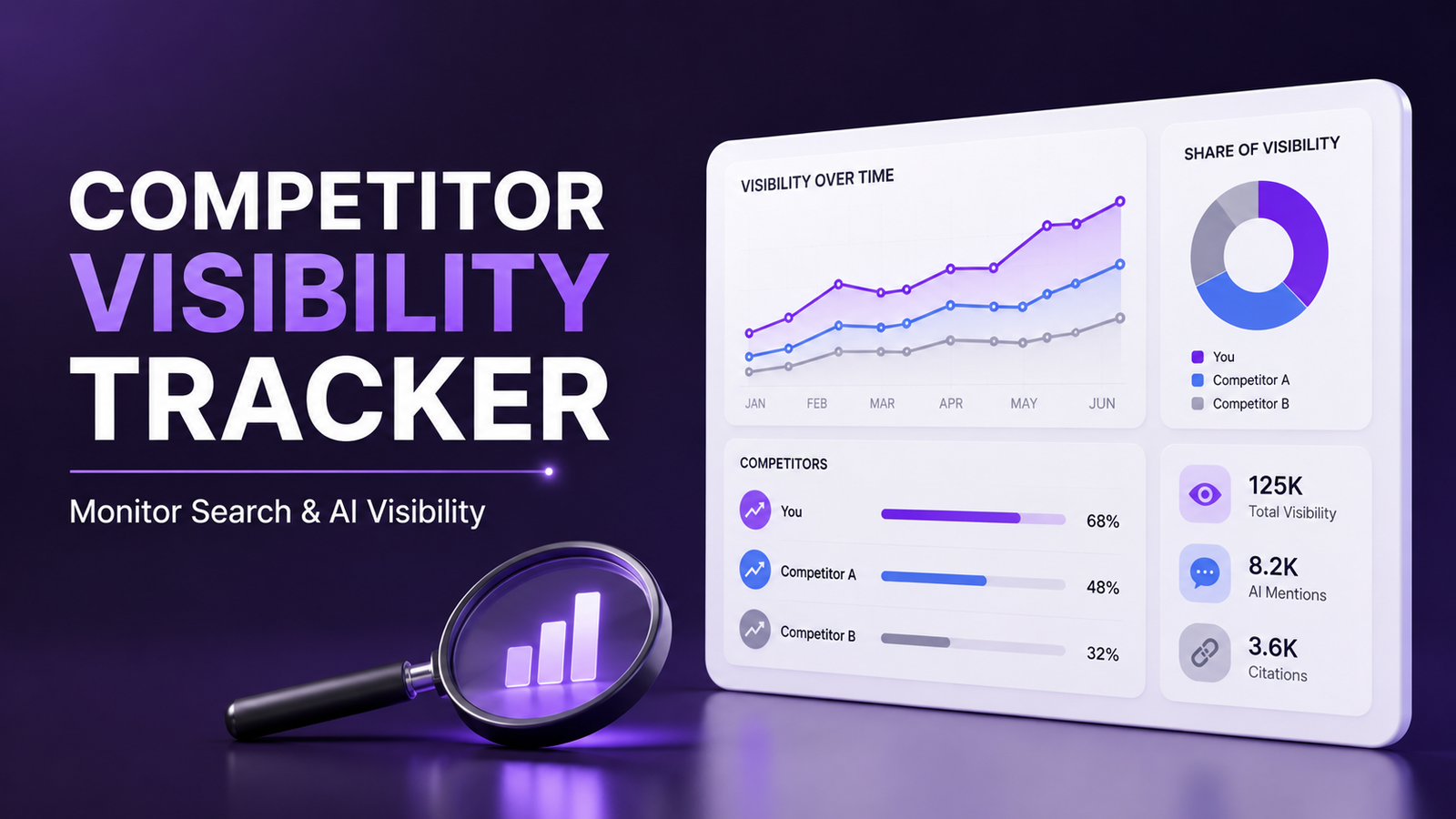
A competitor visibility tracker helps businesses understand where they stand against rivals across search engines and AI-powered platforms like ChatGPT and Google’s AI features. Search discovery now extends beyond traditional search engines, and a visibility tracker gives you measurable data to work from instead of guesswork.
What Is a Competitor Visibility Tracker?
A competitor visibility tracker is a tool or method used to monitor how frequently and prominently a competitor appears across search results, AI-generated answers, and related queries over time. Depending on the platform, this can include keyword rankings, brand mentions, and shifts in visibility trends. The goal is not just to see where competitors rank, but to understand the broader pattern of how visible they are to potential customers.
Why Competitor Visibility Tracking Matters
Search behavior has changed. People no longer rely solely on typed keywords into a search box; AI tools are increasingly used to ask questions directly and receive answers. This means competitor visibility tracking is no longer limited to traditional keyword-ranking data. Businesses that ignore AI-generated mentions may miss an important channel through which customers discover brands. Tracking visibility consistently helps identify gaps, spot emerging competitors, and adjust content strategy before losing ground.
What Should a Competitor Visibility Tracker Measure?
Not every tool covers the same features, and the right mix depends on your goals. Common data points include:
- Keyword rankings and search visibility scores
- Competitor rankings for shared target terms
- Brand and competitor mentions across the web
- AI-generated mentions and citations, where applicable
- Search queries or prompts that trigger competitor visibility
- Visibility trends over time, not just single snapshots
- Content opportunities and topic gaps competitors are covering
Reviewing these data points together, rather than in isolation, gives a more accurate picture of competitive standing.
How to Track Competitor Visibility Step by Step
- Identify three to five direct competitors based on shared audience and offerings, not just industry category.
- Choose a core set of keywords and topics relevant to your business and audience intent.
- Select a tracking method or tool that covers both traditional rankings and, where relevant, AI search visibility tools for broader coverage.
- Establish a baseline for current visibility before making changes.
- Review visibility data on a consistent schedule, such as monthly or biweekly.
- Compare shifts in ranking, mentions, and content coverage against your own performance.
For example, a SaaS company might start by choosing ten to fifteen queries closely tied to its product category, then record which competitors appear for each query across both traditional search and AI tools. Recording that starting point as a baseline makes it possible to review changes each month without relying on guesswork.
How AI Search Changes Competitor Visibility

Traditional rankings measured where a page appeared on a results page. AI-powered search introduces a different dynamic: visibility can mean being cited, summarized, or mentioned within a generated answer rather than listed as a link. This shift means competitor SEO tracking now needs to account for how often a brand is referenced inside AI responses, not only how it ranks in a list. Google has not published a specific formula that guarantees inclusion in its AI-powered search experiences. Businesses should continue following Google’s guidance on AI features and focus on helpful, reliable, people-first content rather than trying to reverse-engineer a fixed set of ranking factors.
How to Track Competitors in AI Search
Monitoring competitor mentions in AI search typically involves running representative prompts through AI platforms and recording which brands appear, how they are described, and what sources are cited. AI-powered search experiences can differ in how they present information, citations, and brand mentions, so tracking methods should be interpreted according to the platform being measured rather than assumed to behave the same way everywhere. Businesses focused specifically on this area often use dedicated tools for monitoring ChatGPT mentions to capture patterns that manual checking would miss.
How to Compare Your Visibility With Competitors
Side-by-side comparison works best when you track the same metrics for your business and each competitor. Look at overlap in ranking keywords, gaps where competitors appear but you do not, and differences in how often each brand is mentioned in AI-generated answers. Tools built around AI Mode rank tracking software can help surface these comparisons when AI search experiences are part of the picture, since visibility there does not always mirror traditional search rankings.
How to Choose a Competitor Visibility Tool
When evaluating a competitor visibility platform, consider what it actually measures versus what it claims to measure. Some tools focus narrowly on keyword rankings, while others incorporate AI competitor tracking, mention monitoring, and content gap analysis. Prioritize tools that provide historical trend data, since a single snapshot rarely tells the full story. For businesses still refining their core SEO approach, Google’s SEO Starter Guide is a useful baseline reference alongside any visibility tool you choose.
A Practical Competitor Visibility Tracking Strategy
An effective strategy combines regular measurement with action. Track core keyword and ranking data weekly or biweekly, review AI mention patterns monthly, and use findings to prioritize content updates or new topics. Pairing competitor data with your own performance metrics in Google Search Console helps confirm whether visibility changes are translating into actual search performance. Solutions like ChatGPT website rank tracking can complement traditional SEO tracking so that both channels are represented in your reporting rather than treated as separate efforts.
Common Mistakes to Avoid
- Tracking too many competitors, which dilutes focus and slows analysis
- Relying only on ranking position while ignoring mention frequency and context
- Checking visibility once and assuming it stays constant
- Ignoring AI-generated search experiences entirely
- Making assumptions without verifying data against a current baseline
Frequently Asked Questions
Is a competitor visibility tracker the same as a rank tracker?
Not exactly. A rank tracker typically focuses on keyword positions, while a visibility tracker can include mentions, AI citations, and broader trend data depending on the platform.
How often should I check competitor visibility?
Monthly reviews work for most businesses, though fast-moving industries may benefit from biweekly checks.
Can I track competitor visibility without paid tools?
Manual tracking is possible using search queries and AI prompts, but it is time-consuming and less consistent than dedicated tracking tools.
Does AI search visibility guarantee more website traffic?
No. Appearing in AI-generated answers can increase brand exposure, but it does not guarantee clicks or traffic in the same way traditional rankings might.
What is the difference between competitor mentions and competitor rankings?
Rankings refer to position in search results for specific keywords. Mentions refer to how often a brand is referenced, whether in articles, citations, or AI-generated responses.
Final Thoughts
A competitor visibility tracker works best as part of a broader strategy, not a standalone fix. Combining consistent measurement with genuine content improvements, ongoing SEO work, competitor analysis, and attention to AI-powered search visibility gives businesses a clearer, more complete view of where they stand and where the opportunities are.

- How to Add Captions to Short Videos That People Actually Read - October 8, 2026
- 10 Step AI Search Content Optimization Checklist - October 6, 2026
- Competitor Visibility Tracker: How to Monitor Search and AI Visibility - August 22, 2026









Pingback: Backlink Booster: How To Amplify Your Backlinks And Rank Faster In 2026
Pingback: SEO Competitive Analysis Checklist: 2026 Worksheet