Apple AI Commercial: Everything You Need to Know About Apple Intelligence Ads in 2026
The Apple AI commercial has become one of the most talked-about advertising campaigns in the tech world not just for what it shows, but for the controversy that followed. From its charming debut featuring a globally recognised actress to a legal settlement that reshaped how the company markets its AI features, the story behind Apple’s AI ads tells you a great deal about where Apple Intelligence stands today. This guide covers every aspect of the Apple AI commercial campaign, who stars in it, what the ads actually show, why some were pulled, and what Apple Intelligence can genuinely do on your iPhone in 2026.
What Is the Apple AI Commercial Campaign?
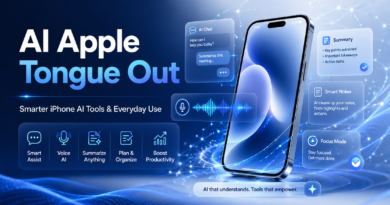
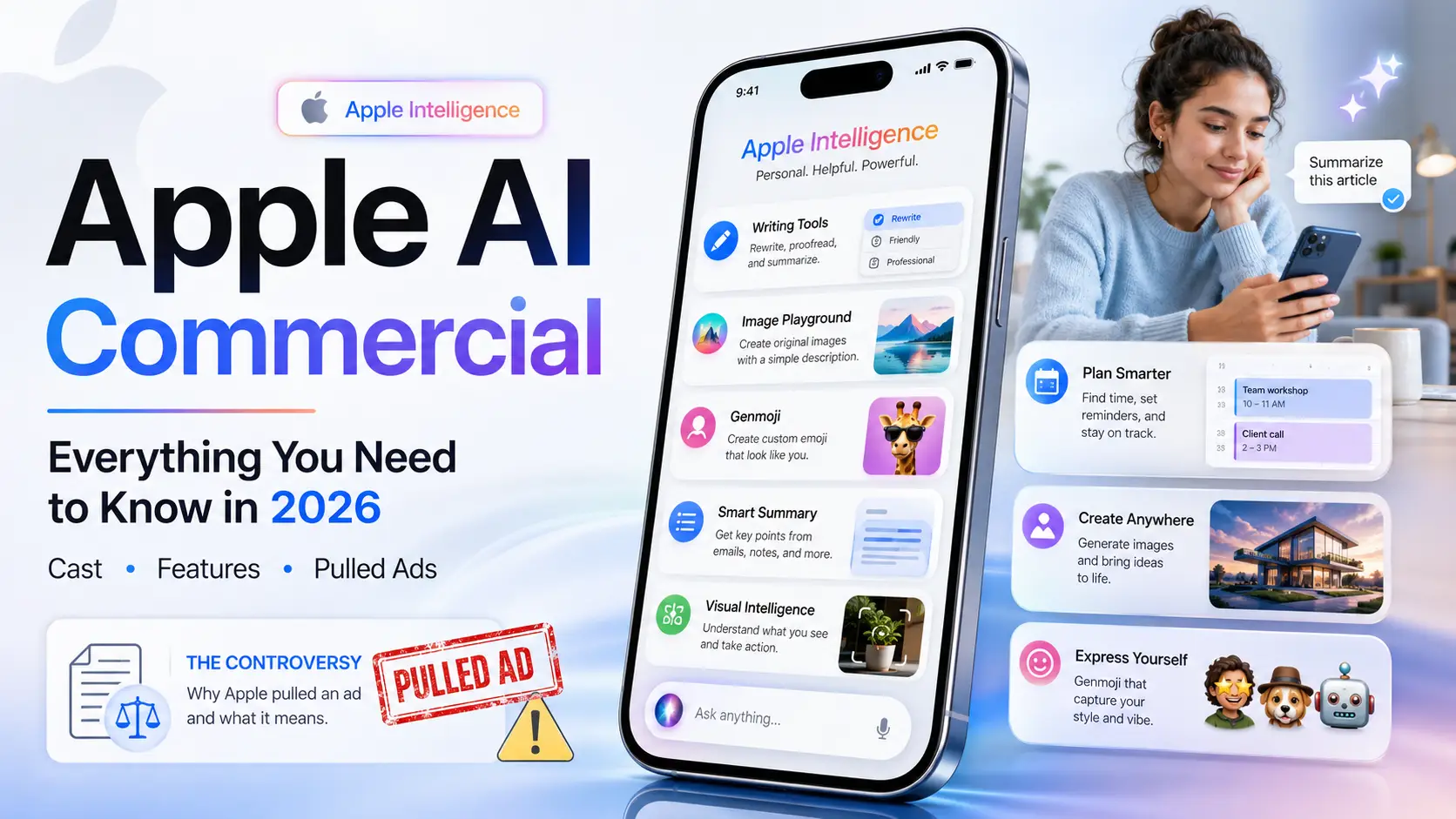
The Apple AI commercial campaign is Apple’s ongoing advertising effort to promote Apple Intelligence the company’s built-in AI system available on iPhone 15 Pro, iPhone 16 series, and later devices. Apple Intelligence is not a single feature but a suite of AI-powered tools embedded across iOS, including Writing Tools, Image Playground, Genmoji, Visual Intelligence, notification summaries, and an upgraded version of Siri.
The campaign launched in September 2024 alongside the iPhone 16 and was created in collaboration with TBWA\Media Arts Lab, directed by Emmy Award-winning comedy director David Shane. The campaign’s tone is deliberately relatable and humorous, placing Apple Intelligence in everyday, slightly awkward real-life situations rather than presenting it as futuristic or technical.
Who Stars in the Apple Intelligence Commercial?
The face of the Apple AI commercial campaign is Bella Ramsey, the British actress best known for her roles as Lyanna Mormont in Game of Thrones and Ellie in The Last of Us. Bella Ramsey was chosen for her natural, emotionally grounded acting style qualities Apple wanted to bring to the AI advertising space to make the technology feel human rather than intimidating.
Bella Ramsey stars in three separate spots under the “Hello Apple Intelligence” campaign. Each ad places her in a different relatable scenario where Apple Intelligence steps in to solve a real-world problem with a light comedic touch. Her casting marked a deliberate shift for Apple moving away from aspirational product imagery toward character-driven storytelling that connects emotionally with a younger audience.
For a full breakdown of Bella Ramsey’s background, her role in the campaign, and what makes her Apple’s chosen face for AI advertising, AdSpotcast’s detailed profile covers everything in one place.
What Do the Apple AI Commercials Actually Show?
The Apple AI commercial series highlights everyday situations where Apple Intelligence makes a visible difference. Here is what each of the key ads demonstrates:
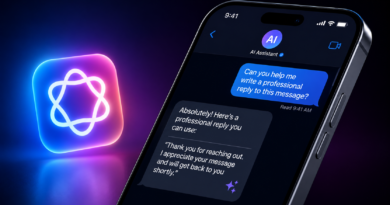
- The “Write Smarter” ad follows an office worker who uses Apple Intelligence’s Writing Tools on his iPhone 16 Pro to transform a casual, overly informal email into a polished, professional message to the visible surprise of his boss.
- The “Create Memory Movies” ad features a mother who realises she has forgotten her husband’s birthday and uses Apple Intelligence to pull together a heartfelt video montage from existing photos and videos in just seconds.
- The “Email Summary” ad shows Bella Ramsey herself at lunch with her agent, realising she never read an important message, and using iPhone’s AI-powered email summary feature to catch up instantly.
The campaign’s creative direction represents a notable shift in Apple’s advertising DNA — moving from its traditionally minimalist, product-led visuals toward narrative-driven storytelling that places relatable human flaws at the centre. The goal is to show that AI is not intimidating or impersonal, but a practical tool for everyday moments that actually go wrong. For a thoughtful critical analysis of what this shift means for Apple’s brand identity, Creative Moment’s in-depth review is well worth reading.
Why Were Some Apple Intelligence Ads Pulled?
This is the part of the Apple AI commercial story that generated the most headlines. In March 2025, Apple pulled its “More Personal Siri” TV ad the spot that featured Bella Ramsey and promoted an advanced, context-aware version of Siri after the National Advertising Division (NAD), a non-profit advertising watchdog under BBB National Programs, raised concerns about the ad’s claims.
The core issue was timing. The ad promoted Siri AI features as though they were immediately available to iPhone 16 users, when in reality several of the key capabilities shown including the deeply personalised, context-aware Siri had been delayed and were not yet delivered. The NAD concluded that Apple’s advertising had blurred the line between what was available and what was still forthcoming, and recommended Apple discontinue the ad and modify its marketing language.
Apple complied, removing the ad from YouTube and updating its Apple Intelligence webpage. The original Available Now headline was replaced with AI for the rest of us. The company also faced a class-action lawsuit over the same issue, which was settled in May 2026 for $250 million. Eligible customers who purchased qualifying iPhone 16 and iPhone 15 models between June 2024 and March 2025 could claim up to $95 per device.
What Apple Intelligence Can Actually Do in 2026
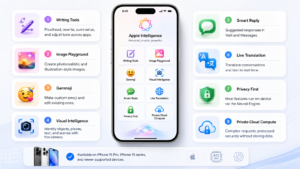
The controversy aside, Apple Intelligence has expanded significantly since the original ads ran. As of iOS 26.4 in mid-2026, here is what the system genuinely delivers:
- Writing Tools — available across virtually all apps, Writing Tools can proofread, rewrite, summarise, and adjust the tone of any text you type, now including most third-party apps through Siri AI integration.
- Image Playground — generates photorealistic images and illustration-style artwork on-device, now with SynthID watermarking on all generated images for transparency.
- Genmoji — creates custom emoji from text descriptions, now with the ability to describe edits to an existing Genmoji rather than generating a new one from scratch.
- Visual Intelligence — uses the iPhone camera to identify objects, places, text, and scenes in real time, delivering information without needing to leave the camera view.
All on-device features Writing Tools, Genmoji, Image Playground, and most Siri processing run entirely on the iPhone’s Neural Engine. No data leaves the device. Complex queries that require external processing use Apple’s Private Cloud Compute infrastructure, which handles requests without storing data and without Apple employee access. For full setup instructions and a feature-by-feature walkthrough, Apple’s official support guide is the most reliable and up-to-date reference available.
Which iPhones Support Apple Intelligence?
Apple Intelligence requires an iPhone with an A17 Pro chip or newer. That means:
- iPhone 15 Pro and iPhone 15 Pro Max
- iPhone 16, iPhone 16 Plus, iPhone 16 Pro, and iPhone 16 Pro Max
- iPhone 17 series (all models, released September 2025)
The standard iPhone 15, all iPhone 14 models, and any device released before the A17 Pro chip are not supported. If you are unsure which model you have, go to Settings, then General, then About, and check the chip listed under Model Name.
How Apple’s AI Advertising Strategy Changed After the Controversy
The pulled ads and the subsequent legal pressure forced a meaningful recalibration in how Apple talks about its AI. The company has since moved away from feature-specific promise-based advertising toward demonstrating capabilities that are already live and available. The “Flex” and “Clean Up” ads that followed focused on tangible, available tools specifically the Clean Up feature in Photos, which removes unwanted objects or people from the background of images rather than aspirational future capabilities.
Apple’s current tagline for Apple Intelligence, AI for the rest of us, is a deliberate echo of the famous computer for the rest of us positioning from the original Mac era. It signals a return to Apple’s core brand promise accessible, human-centred technology after a period where AI marketing across the industry, including Apple’s own, overclaimed and underdelivered.
Apple Intelligence in iOS 26 and What Is Coming Next
With iOS 26, Apple has continued expanding Apple Intelligence across all of its platforms iPhone, iPad, Mac, and now Apple Watch. The update brings Siri 2.0, powered partly by Google Gemini for complex queries, Smart Reply in Mail and Messages that matches your personal writing style, and an expanded set of Writing Tools that now work through Siri across virtually any app.
Image Playground’s move to photorealistic generation marks a significant upgrade over the illustration-only outputs of earlier versions. Live Translation, Priority Notifications, and tighter ChatGPT integration have also matured considerably since the original campaign aired.
Conclusion
The Apple AI commercial campaign is more than a product advertisement it is a case study in how the tech industry is learning to market AI honestly. The campaign introduced Apple Intelligence to millions of users through relatable storytelling and a smart casting choice in Bella Ramsey, but it also served as a lesson in the risks of advertising features before they are fully delivered. The subsequent ad pulls, regulatory action, and legal settlement have shaped a more grounded and transparent approach from Apple in 2026.
What the commercials got right was the vision: Apple Intelligence is genuinely useful for everyday communication, creativity, and productivity. What the controversy revealed is that the gap between that vision and delivery matters to real users. As Apple Intelligence matures across iOS 26 and beyond, the features shown in those early ads are finally arriving and in many cases, going further than the original commercials suggested.
For more expert coverage of AI-powered iPhone apps and features, visit our iPhone AI Apps Guide.
Frequently Asked Questions
Q1: Who is the actress in the Apple AI commercial?
The actress in the Apple Intelligence commercial series is Bella Ramsey, a British actor known for playing Lyanna Mormont in Game of Thrones and Ellie in The Last of Us. She stars in three spots under the “Hello Apple Intelligence” campaign created by TBWA\Media Arts Lab. Apple chose her for her natural, emotionally relatable acting style, which suited the campaign’s goal of making AI feel accessible rather than technical or intimidating.
Q2: Why was the Apple Intelligence ad removed?
Apple pulled its “More Personal Siri” commercial in March 2025 after the National Advertising Division concluded that the ad implied certain Siri AI features were already available when they had in fact been delayed. Apple voluntarily discontinued the ad and updated its marketing language, removing Available Now from its website. The company also settled a related class-action lawsuit in May 2026 for $250 million, with eligible customers able to claim up to $95 per device.
Q3: What does the Apple AI commercial advertise specifically?
The Apple AI commercial series advertises Apple Intelligence — Apple’s suite of on-device AI features built into iPhone 15 Pro and later models. The specific features highlighted across the ads include Writing Tools for email refinement, Memory Movies for automatic video creation, Email Summary for quick message catch-up, and Clean Up for removing unwanted elements from photos. All of these features are available in iOS 26.
Q4: Does Apple Intelligence work on all iPhones?
No. Apple Intelligence requires an iPhone with an A17 Pro chip or newer. This includes iPhone 15 Pro, iPhone 15 Pro Max, all iPhone 16 models, and all iPhone 17 models. The standard iPhone 15, all iPhone 14 models, and earlier devices are not supported regardless of iOS version, because the Neural Engine in older chips cannot handle on-device AI processing at the required level.
Q5: What Apple Intelligence features are available in 2026?
As of iOS 26.4 in mid-2026, Apple Intelligence includes Writing Tools (available across virtually all apps), Image Playground (now with photorealistic output), Genmoji, Visual Intelligence, notification summaries, Smart Reply in Mail and Messages, Live Translation, and Siri 2.0 with Google Gemini integration for complex queries. Most features process entirely on-device for privacy, with complex tasks handled through Apple’s Private Cloud Compute infrastructure.

- Competitor Visibility Tracker: How to Monitor Search and AI Visibility - August 22, 2026
- AI Search Optimization Services: How Businesses Can Improve AI Search Visibility - August 18, 2026
- How Can an AI Search Monitoring Platform Improve SEO Strategy? - August 14, 2026