Is Apple AI Good Enough to Compete in 2026? An Honest Assessment
Is Apple AI good that’s the question millions of iPhone, iPad, and Mac users are genuinely asking in 2026. Apple Intelligence, the company’s unified AI layer rolled out across its ecosystem, has had time to mature since its initial launch, and the verdict from real users is more nuanced than either Apple’s marketing or its critics suggest. This guide cuts through the noise and gives you a clear, honest picture of where Apple’s AI delivers, where it falls short, and whether it’s worth relying on as your primary AI experience.
What Apple Intelligence Actually Does
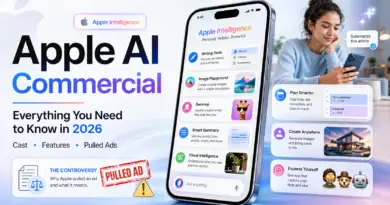
Before answering is Apple AI good in any meaningful way, it helps to understand what Apple Intelligence actually covers. It isn’t a single product it’s a suite of AI-powered features woven into iOS 18, iPadOS 18, and macOS Sequoia. The core capabilities include:
- Writing Tools rewriting, proofreading, and summarizing text across any app
- Priority Notifications AI that surfaces what actually matters in your inbox and alerts
- Smart Reply suggestions in Mail and Messages
- Image Playground and Genmoji for generating custom visuals
- A significantly upgraded Siri with on-screen awareness and app-level action capability
- Clean Up tool in Photos for AI-powered object removal
The scope is broader than most users realize, which is part of why the question is Apple AI good tends to get inconsistent answers people are often evaluating completely different features. You can review Apple’s full official breakdown of what’s included directly on the Apple Intelligence product page.
Where Apple AI Genuinely Performs Well
Is Apple AI good for everyday practical tasks? For several specific use cases, the answer is a clear yes. Apple’s Writing Tools are genuinely useful for rewriting emails to change tone, summarizing long threads in Mail, and proofreading documents all without leaving the app you’re already in. The seamlessness is the real advantage here, and no competing platform currently matches how naturally Apple AI integrates into the OS rather than sitting as a separate app.
The Photos Clean Up tool is another standout. Object removal works remarkably well for distracting backgrounds, stray objects in travel shots, and even complex edge cases like removing a person from a crowd scene. For photographers who want results without switching to a third-party editor, this alone is a compelling answer to is Apple AI good for creative work.
Priority Mail and Priority Notifications have also earned genuine praise from productivity-focused users. The AI accurately identifies time-sensitive messages and collapses low-priority notifications in a way that doesn’t feel arbitrary, which is harder to achieve than it sounds.
Where Apple AI Still Disappoints
Is Apple AI good across the board? Not quite. The areas where it noticeably underperforms competitors are worth being direct about.
Siri remains the weakest link despite significant improvements. While the new Siri can take in-app actions, read your screen, and handle multi-step requests better than before, it still trails ChatGPT and Google Gemini in pure conversational reasoning depth. Complex follow-up questions, nuanced instructions, and tasks requiring extended context often produce results that feel like Siri is guessing rather than understanding.
Image Playground, Apple’s generative image tool, produces outputs that feel notably more limited and stylistically restricted than Midjourney or even free-tier alternatives. The intentional constraint toward illustration styles rather than photorealism is a deliberate choice, but it limits creative use cases considerably.
- Siri’s conversational reasoning still lags ChatGPT and Gemini for complex queries
- Image generation quality is constrained compared to dedicated AI art platforms
- Apple Intelligence features require iPhone 15 Pro or later, M1 chip Macs, or newer iPads
- No web-connected real-time research capability unlike Perplexity or Gemini
Is Apple AI Good for Privacy-Conscious Users?
This is where Apple’s approach genuinely pulls ahead of every competitor. When evaluating is Apple AI good from a privacy standpoint, the answer is unambiguously yes. Apple processes the vast majority of AI tasks entirely on-device using the Neural Engine, meaning your emails, messages, and photos never leave your device for standard AI features. When cloud processing is required for more complex requests, Apple uses Private Cloud Compute a system where requests are processed on Apple Silicon servers with no persistent storage and no access even by Apple employees.
For users in healthcare, legal, finance, or anyone handling sensitive personal data, this architecture is a meaningful differentiator. Apple has published a detailed technical overview of how this system works on the Apple Security Research blog, which is worth reading for anyone making privacy-based purchasing or platform decisions.
How Apple AI Compares to ChatGPT and Google Gemini
Is Apple AI good relative to its direct competitors? The honest comparison looks like this: Apple Intelligence wins on privacy, OS integration, and photo editing capabilities. ChatGPT wins on raw conversational intelligence, research depth, and creative writing assistance. Google Gemini wins on real-time web access, Google Workspace integration, and multilingual breadth.
Apple has made a strategic choice to prioritize usefulness within its own ecosystem over being the best standalone AI assistant and that tradeoff makes sense for users who live inside Apple’s apps and want AI that works without switching contexts. For users who need deeper generative capability, Apple actually acknowledges this gap by integrating ChatGPT directly into Siri as an optional extension, letting you route complex queries to OpenAI’s model when Apple’s on-device processing isn’t sufficient.
Who Should Rely on Apple AI in 2026
Is Apple AI good enough to be your only AI tool? That depends entirely on your use case. For iPhone users who want AI-assisted writing, smart notification management, photo editing, and basic Siri upgrades without downloading anything new or paying extra subscriptions, Apple Intelligence delivers meaningful daily value. For users who need deep research, advanced image generation, or sophisticated conversational AI, Apple’s ecosystem works best as a complement to a dedicated AI tool rather than a replacement.
If you’re specifically exploring AI tools for iPhone beyond what Apple Intelligence offers natively, this iPhone AI apps guide covers the wider landscape of third-party options worth adding to your device.
Device Compatibility and Availability
Is Apple AI good if you’re not on the latest hardware? Unfortunately, Apple Intelligence is restricted to a relatively recent device tier. On iPhone, it requires an iPhone 15 Pro, iPhone 15 Pro Max, or any iPhone 16 model. On iPad and Mac, it requires an M1 chip or later. This hardware ceiling means a significant portion of Apple’s active user base can’t access these features at all, which is an important practical limitation that competitors running cloud-based AI don’t share.
According to device usage tracking published by StatCounter’s iOS version market share data, a substantial portion of active iPhones still run on hardware that predates Apple Intelligence compatibility meaning the feature set remains out of reach for many existing Apple customers.
Strategic Insight
Is Apple AI good in 2026? It’s genuinely good at specific things on-device privacy, Writing Tools, Photos editing, and OS-level integration and still developing in others, particularly conversational AI depth and generative image quality. The most accurate answer is that Apple Intelligence is the best AI for users who want privacy-first, friction-free AI woven into daily iPhone and Mac use, and a secondary tool for users who need deeper generative or research capability. Apple is playing a longer game than competitors, and the foundation it’s building on-device processing, ecosystem integration, and trust positions it well even if the current feature set doesn’t yet match the raw capability ceiling of dedicated AI platforms.
Quick Answers
Does Apple AI work on all iPhones?
No. Apple Intelligence requires iPhone 15 Pro or iPhone 16 and later on the iPhone side, along with iPads and Macs with M1 chip or newer. Older devices don’t have sufficient Neural Engine capacity to run on-device AI processing at the level Apple Intelligence requires.
Is Apple AI free to use?
Yes. Apple Intelligence is included at no additional cost with compatible devices running iOS 18, iPadOS 18, or macOS Sequoia. The ChatGPT integration within Siri is also available free for basic queries, with an option to connect a paid ChatGPT account for extended access.
Can Apple AI access the internet for real-time information?
Not directly through Apple Intelligence itself. Siri can hand off complex web-connected queries to ChatGPT when enabled, but Apple’s native AI features operate on-device or through Private Cloud Compute rather than browsing the live web the way Google Gemini does.
Is Apple AI good enough to replace a standalone AI app?
For everyday writing assistance, notification management, and photo editing, yes. For advanced conversational AI, detailed research, or high-quality image generation, a dedicated app like ChatGPT or Perplexity still adds meaningful capability that Apple Intelligence doesn’t yet match on its own.

- How Many Weeks Between Two Dates? A Simple, Accurate Guide - October 16, 2026
- What Elements Are Foundational for SEO with AI? The Two-Layer Framework for 2026 - October 15, 2026
- 9 Best HARO Alternatives in 2026 (After HARO Shut Down) - October 15, 2026