
AI Tools for Building Lead Lists: Process, Verified Prices, and Honest Picks
Here is the uncomfortable truth behind every “best AI lead list tools” roundup: the tools were never the hard part. AI can find you ten thousand contacts in an afternoon. The hard part is that most of those contacts are wrong for you, unreachable, or copied from a database that went stale months ago. Ask any sales team and they will tell you the same thing: bad data costs more than no data, because it burns time, budget, and your sender reputation all at once.
So this guide to AI tools for building lead lists starts with the process and gets to the tools second. Below is the four-step workflow that turns AI from a contact firehose into a reliable lead list, followed by honest picks for each step with pricing as it actually stands. Prices in this niche change constantly, so every figure below is marked as “check the vendor page” rather than stated as permanent fact. And “free” gets the stress test it deserves.
Step 1: Define Who You Are Looking For, Precisely
No AI tools for building lead lists can compensate for a vague target. Before opening any platform, write down your ideal customer profile in concrete terms: industry, company size range, geography, job titles, and the trigger events that make someone buy now rather than later.
“Marketing managers at SaaS companies” is not a profile; it is a wish. “VP of Sales at B2B SaaS companies with 50 to 500 employees in North America, hiring for SDR roles” is a profile a tool can actually search for.
This step also protects your budget. Every lead database charges in credits, and credits are spent per lookup or enrichment. Every vague search wastes credits on contacts you will never email. One sharp afternoon on your ICP saves more money than any pricing trick.
Step 2: Source the List From a Real Database
AI prospecting tools are mostly interfaces over large contact databases plus filters and some AI scoring. The database quality is what you are actually paying for, so compare on coverage and freshness rather than feature gloss.
Apollo.io is the default starting point for most small and mid-sized teams, and for good reason. It combines a large contact database with built-in email sequencing and outreach, so one subscription covers both list building and first contact. Its own pricing page lists a free Starter plan that stays free with no time limit, plus Basic, Professional, and Custom tiers, with credits granted per billing cycle that reset without rolling over. Database-size claims like “275M+ contacts” are Apollo’s own marketing, so treat them as directional rather than audited. The real advantage is consolidation: most teams spend less with Apollo than with a database plus a separate sequencing tool.
Seamless.ai is a real-time B2B contact search engine focused on finding emails and direct dials on demand rather than bulk exports. Its marketing emphasizes large email counts, which are self-reported figures. Pricing is typically quote-based for annual contracts, which makes it harder to compare upfront. Best for teams that value fresh, on-demand lookup over a static database they maintain themselves.
Step 3: Enrich With a Waterfall, Not a Guess
Sourcing gives you names and titles. Enrichment turns them into usable contacts: verified emails, phone numbers, company context, tech stack signals. The serious approach is waterfall enrichment, where a tool tries one data provider after another until it finds a match, instead of relying on a single source that is wrong a third of the time.
Clay is the specialist here. It orchestrates enrichment across more than a hundred data providers, so you get the waterfall effect without wiring it up yourself. It is priced as a premium tool: published plan figures in roundups place it well above a hundred dollars a month, with specific numbers varying by source, so confirm on clay.com before budgeting. Lusha sits in the same enrichment lane with a simpler pitch: verified B2B contact and company data with GDPR and CCPA compliance positioning.
Enrichment tools are where the AI label is most honestly earned, because combining and scoring conflicting provider data is exactly what machine models do well.
Step 4: Verify Before You Email Anything
This is the step most teams skip and the one that costs them the most. B2B contact data decays constantly as people change jobs, and unverified lists bounce. High bounce rates damage your sender reputation with email providers, which means your good emails start landing in spam. No AI tool fixes this by itself, because it is a data hygiene problem, not an intelligence problem.
Run every list through a dedicated email verification service before any outreach goes out, and re-verify quarterly if the list sits unused. Expect some percentage of any list to come back invalid, no matter which database you bought from. The vendor’s accuracy claims are their own marketing; your verification results are the truth about your list.
The Picks Side by Side
Five AI tools for building lead lists, compared on the job they do and how honest their free tier is.
| Tool | Job it does | Pricing notes | Genuinely free option? |
|---|---|---|---|
| Apollo.io | Sourcing + outreach in one | Free Starter plan confirmed on official pricing page; Basic, Professional, Custom tiers; credits reset monthly | Yes, Starter stays free with limits |
| Seamless.ai | Real-time contact search | Quote-based annual pricing; confirm with sales | Trial-style credits, not truly free |
| Clay | Waterfall enrichment | Premium pricing; published figures vary, verify on clay.com | Free trial/tier with tight limits |
| Lusha | Verified contact data | Tiered plans on official site; confirm current pricing | Limited free credits to start |
| Instantly.ai | Cold email outreach at scale | Roundups report plans from around $47/mo; verify on instantly.ai | No meaningful free plan |
Stress-Testing the “Free” Claims
Nearly every tool in this space claims something is free. Read those claims carefully. Apollo’s free Starter plan is the real thing: no time limit, genuinely usable for light prospecting, with credit limits that cap how much you can do. That is an honest freemium model.
Most others mean a free trial or a handful of starter credits that do not replenish, which is enough to evaluate the tool but not to run a pipeline on. If a “free” lead list tool gives you a thousand contacts with no effort, the list is either stale, scraped, or not really free. The compliance section below explains why scraped matters.
The Compliance Part Nobody Enjoys
Data law applies to AI tools for building lead lists regardless of how clever the sourcing method was. GDPR, CCPA, and CAN-SPAM apply all the same, and scraping LinkedIn or other platforms may violate their terms of service even when the data looks public.
The practical rules: only collect data you have a legitimate reason to use, give recipients a clear way to opt out, and keep records of where your data came from. This is not legal advice, but ignoring it is the fastest way to turn a lead list into a liability.
Build the Process, Then Buy the Tool
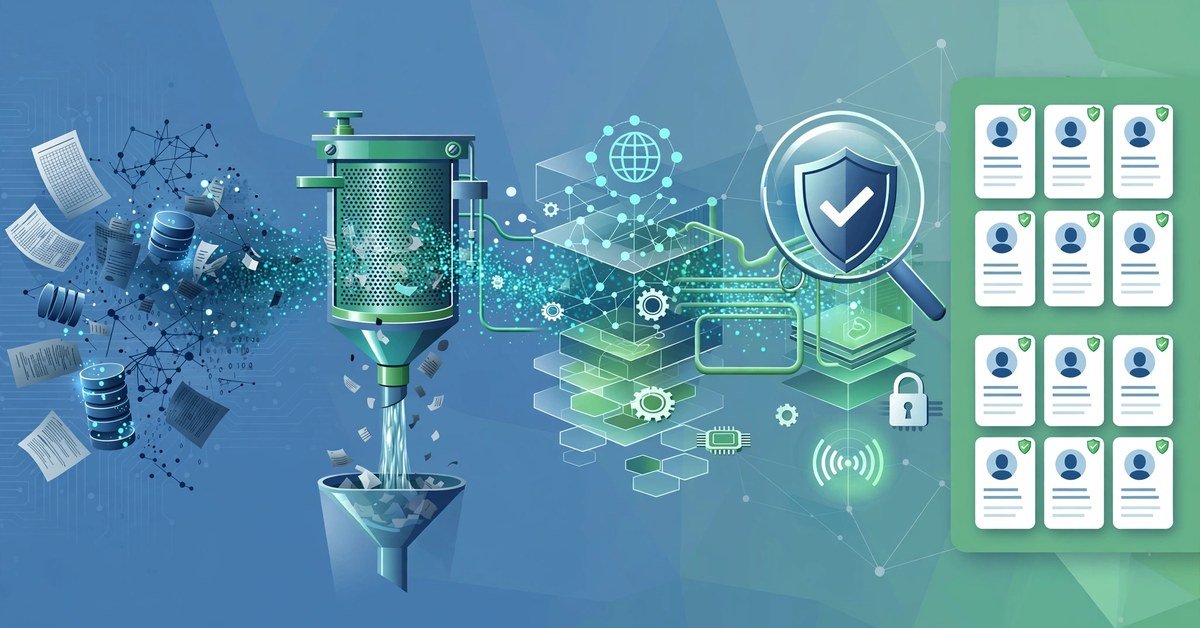
The pattern behind every successful use of AI tools for building lead lists is the same: a sharp ICP, a database that covers your market, waterfall enrichment, verification before outreach, and outreach that respects the law. Buy AI tools for building lead lists for the step where you are weakest, not for the features that demo best.
A solo founder can run the whole process on Apollo’s free plan plus a verification service. A team doing real outbound volume will outgrow that and should price Clay or an equivalent against the cost of bounced emails and wasted SDR hours. Either way, the process is the investment; the tools are just the equipment. And if your outreach needs a human touch on top of the automation, the same discipline that builds a lead list builds a prospecting list for guest posts, which is exactly how finding guest post opportunities works in our own workflow. For weighing one established database against another before you commit, our guide to AI tools for digital marketing freelancers covers related tool selection logic.
AI Tools for Building Lead Lists: Questions Answered
These are the questions people ask most about AI tools for building lead lists, answered without the hype.
What is the best AI tool for building lead lists?
There is no single best tool because list building has four jobs: sourcing, enrichment, verification, and outreach. Apollo is the strongest all-rounder for small teams since it combines sourcing with outreach. Clay is the specialist for enrichment. Pick based on which step is currently your bottleneck.
How do AI tools actually build lead lists?
They search large contact databases using your filters, score or prioritize contacts with models trained on buying signals, and hand the list to an outreach tool. The AI is mostly in the matching, enrichment, and scoring; the underlying contact data comes from databases and public sources.
Is Apollo.io free, and what are its limits?
Apollo’s Starter plan is genuinely free with no time limit, which is confirmed on its official pricing page. It includes limited monthly credits for lookups and emails, Gmail-only sending, and basic features.
Paid tiers raise credit limits and add features like call recording and advanced CRM integrations. Credits reset each billing cycle and do not roll over.
Apollo vs Clay: which is better for lead generation?
They do different jobs. Apollo is a database plus outreach platform: you search for contacts and email them from the same tool. Clay is an enrichment orchestration tool: you bring or find contacts and Clay enriches them across 100+ providers. Many teams use both, but if you can only buy one, Apollo covers more of the workflow.
Are AI-generated lead lists GDPR compliant?
AI generation does not determine compliance; how the data was collected and how you use it does. You still need a lawful basis for processing, clear opt-outs, and respect for platform terms of service. Tools that position themselves as GDPR compliant are describing their own practices, not granting you immunity.
How accurate is AI lead data, and how do I verify emails?
Vendor accuracy claims are marketing and should not be trusted at face value. Verify every list with a dedicated email verification service before outreach, watch your actual bounce rates, and re-verify lists quarterly. Your measured deliverability is the only accuracy metric that matters.

- How Many Weeks Between Two Dates? A Simple, Accurate Guide - October 16, 2026
- What Elements Are Foundational for SEO with AI? The Two-Layer Framework for 2026 - October 15, 2026
- 9 Best HARO Alternatives in 2026 (After HARO Shut Down) - October 15, 2026