
10 Step AI Search Content Optimization Checklist
The 10 step AI search content optimization checklist gives businesses and content teams a practical way to adapt their content for a search landscape that no longer begins and ends with a ranked list of links. AI search content optimization means structuring, clarifying, and supporting content so that AI-powered answer engines, including Google AI Overviews, ChatGPT, Gemini, and Perplexity, can better understand it and potentially use it when generating a response.
Traditional SEO alone is no longer the whole picture because it was built around a different output: a results page that people scan and click through. AI-powered search can compress that process into a generated answer, often with a smaller number of cited sources. Content that performs well in traditional search may still be left out of an AI-generated answer if it is difficult to understand, thin on substance, or inconsistent with information available elsewhere online.
This checklist walks through ten practical steps for optimizing content for AI search, covering everything from search intent and answer-first structure to technical SEO and ongoing visibility monitoring. None of these steps guarantee a citation or ranking in any specific AI system, since AI search engines do not provide a universal method for selecting sources. However, these practices can help create content that is useful, understandable, accessible, and easier for search and AI-powered systems to interpret.
Step 1: Build Content Around Real Search Intent and Questions
AI search optimization starts with understanding what a person is actually trying to find out, not just which keyword they typed. Conversational queries sent to AI assistants can be longer and more specific than traditional search terms, often phrased as complete questions. Content built around the real question behind a topic, rather than a narrow keyword phrase, can be easier for both traditional search engines and AI-powered systems to understand and match with relevant queries.
A practical way to apply this is to list the actual questions customers or readers ask, in their own words, and make sure each one has a direct, specific answer somewhere on the site. Comparison questions, “how to” questions, and “best for X” questions are especially useful to consider when planning content and deserve dedicated coverage rather than a single paragraph buried inside a broader article.
Step 2: Lead With a Clear, Answer-First Structure
AI-powered search systems can process information more effectively when content states its main point clearly instead of making readers work through a long introduction before reaching the answer. An answer-first structure means putting a direct, concise answer near the top of a page or section, followed by supporting detail, examples, and important context.
This does not mean sacrificing depth. It means separating the direct answer from the explanation that follows it, so readers and search systems can identify the core information without working through unnecessary text. Short definitional sentences, clear topic sentences, and a logical paragraph order all support this approach.
Step 3: Strengthen Topical Coverage and Semantic Relevance
A single page rarely demonstrates enough depth to establish strong topical coverage on its own. AI search content optimization benefits from comprehensive coverage of a subject across multiple related pages that address different angles of the same topic, from beginner explanations to comparisons and specific use cases.
Semantic relevance matters here as well. Content that naturally uses related terms, synonyms, and associated concepts, rather than repeating one exact phrase, can demonstrate that the page covers the subject comprehensively. Businesses building out a broader content strategy around this often look at AI search optimization services to identify where their existing content library has genuine gaps and where it already provides sufficient coverage.
Step 4: Prioritize Accurate, Original, and Trustworthy Information
Factual accuracy is essential in AI search content optimization. Search and AI-powered systems need to interpret information correctly, while factual errors can undermine a page’s credibility even if the rest of the content is well structured.
Original information can also make content more useful. Content that simply restates widely available information without adding anything new, such as first-hand data, direct experience, examples, or a distinct perspective, may offer little additional value compared with many similar pages. Citing credible sources for important claims and keeping facts and figures current can further strengthen the usefulness and reliability of the content.
Step 5: Clarify Entities and Context
AI-powered search systems, like modern search engines, can interpret content in terms of entities such as people, businesses, products, locations, and the relationships between them, rather than treating text as an unstructured string of keywords. Entity optimization means clearly naming and describing what a page is actually about, including the business, product, or concept at its center, rather than relying on implied context.
This also extends beyond a single page. Keeping a business name, description, and core details consistent across the website and reputable third-party listings can make it easier for search systems to understand the entity and distinguish accurate information from conflicting details.
Step 6: Use Structure, Headings, Lists, and Tables for Scannability
Clear structure helps both human readers and search systems understand information efficiently. Descriptive headings that reflect the actual content beneath them, properly structured lists, and tables for comparative or step-by-step information can make content easier to read and interpret.
Tables can be particularly useful for AI search content optimization when they present information in a compact, clearly labeled format. The table below summarizes this ten-step checklist in the same format.
| Step | Optimization Area | What to Do | Why It Matters for AI Search |
|---|---|---|---|
| 1 | Search intent | Build content around real questions, not just keywords | Helps address the questions people actually search for |
| 2 | Content structure | Lead with a direct answer before supporting detail | Makes important information easier to identify and understand |
| 3 | Topical coverage | Cover a subject across multiple related pages | Builds comprehensive coverage instead of relying on one thin page |
| 4 | Accuracy and originality | Use correct facts and add original insight | Improves usefulness, credibility, and content quality |
| 5 | Entity clarity | Clearly define the business, product, or topic | Helps search systems understand the subject and its context |
| 6 | Scannability | Use headings, lists, and tables | Makes information easier for readers and systems to interpret |
| 7 | Internal linking | Connect related pages with descriptive links | Helps users and search engines discover related content |
| 8 | Technical SEO | Maintain crawlability, speed, and clean HTML | Helps search engines access and understand the content |
| 9 | Citability | Earn relevant mentions and links from credible sources | Can strengthen the broader authority and discoverability of a site |
| 10 | Monitoring | Track AI mentions, citations, and visibility over time | Helps evaluate whether the content strategy is producing useful results |
Step 7: Strengthen Internal Linking and Topical Authority
Internal linking connects related content so that both readers and search engines can understand how topics relate to one another. A well-linked cluster of pages, where supporting articles link to a core resource and to other relevant pages, can strengthen topical coverage and make related information easier to discover.
Descriptive anchor text matters here as much as the links themselves. Anchor text that describes the destination page, rather than generic phrases like “click here,” gives readers and search systems a clearer idea of what the linked content covers. Businesses working through a larger content audit sometimes bring in an AI search optimization consultant to identify internal linking gaps and improve the organization of an existing content library.
Step 8: Maintain Strong Technical SEO and Crawl ability
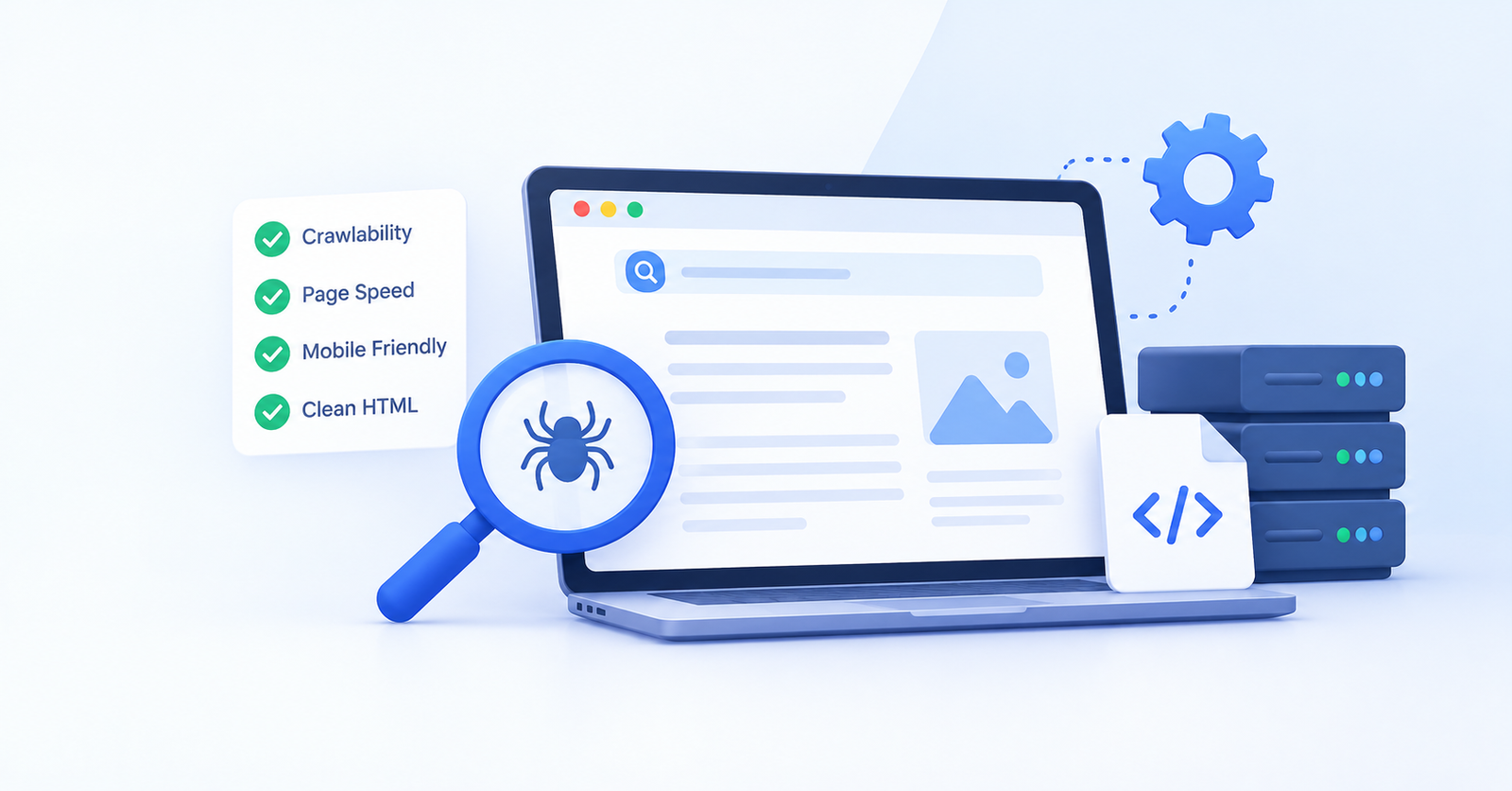
No amount of content quality can compensate for a page that search engines cannot crawl, access, or index properly. Technical SEO fundamentals, including clean HTML, reasonable page speed, mobile usability, correct canonical tags, and an accurate sitemap, remain important parts of AI search content optimization.
Structured data should accurately reflect what is visibly present on the page. Adding exaggerated or misleading schema in an attempt to influence search or AI systems can create problems rather than improve visibility. Structured data should therefore be accurate, relevant, and consistent with the visible content.
Step 9: Improve Content Citability and Authority
Citability refers to how easily a page can be referenced as a useful and credible source, whether by another website, a journalist, or an AI system generating an answer. Content that states clear facts, defines terms precisely, and makes important information easy to understand can be easier to reference than content that hides its main conclusions behind vague language.
Earning relevant mentions and backlinks from credible, topically related sources can support the broader authority and discoverability of a website. Backlinks alone do not determine whether an AI system will cite a page, but relevant and trustworthy references can contribute to a site’s overall online credibility. A relevant, trustworthy mention is generally more valuable than relying on a large volume of low-quality links.
Step 10: Monitor AI Search Visibility, Citations, and Performance
AI search visibility should be tracked as a trend rather than judged from a single test query, because AI-generated answers can vary between sessions and change as models and search systems are updated. Monitoring can include tracking how often a brand is mentioned or cited across different AI platforms, watching for changes in competitor visibility, and reviewing which relevant queries or prompts surface a site’s content.
Businesses that want a structured way to track this over time can use an AI search monitoring platform alongside existing analytics, since manual spot checks in a single chat window may not provide a complete picture of visibility trends.
Two useful free tools can also support a regular monitoring routine. Google Search Console can help you monitor how your pages perform in Google Search, including reporting related to Google’s generative AI features. Google Trends can help identify changes in search interest and emerging topics, which can inform the questions that new or updated content should address.
Frequently Asked Questions
How do I optimize content for AI search?
Start by addressing real questions directly, structuring content so important answers appear early, covering a topic comprehensively across related pages, and keeping facts accurate and consistent. Supporting technical SEO, internal linking, and relevant mentions can strengthen the overall content strategy, while ongoing monitoring can help you understand changes in visibility over time.
What is the difference between traditional SEO and AI search optimization?
Traditional SEO focuses heavily on helping pages appear prominently in search results, while AI search optimization focuses on making content clear, useful, accessible, and easy for AI-powered search systems to interpret and potentially reference in generated answers. The two approaches share many of the same fundamentals, including content quality, technical SEO, search intent, and authority.
Does AI search optimization replace traditional SEO?
No. AI search optimization builds on traditional SEO practices rather than replacing them. A website still needs strong technical foundations, accessible content, useful information, and clear site structure. Optimizing for AI-powered search should therefore be treated as an extension of a broader search strategy.
Final Thoughts
Working through this 10-step AI search content optimization checklist is less about chasing a specific AI system’s algorithm and more about building content that is genuinely useful, accurate, well structured, and easy to understand. AI-powered search systems can change over time, so there is no single tactic that guarantees visibility or citations. Businesses that focus on real answers, clear structure, verifiable information, useful internal connections, and credible supporting signals can build a stronger foundation for both traditional search and AI-powered discovery. Monitoring performance over time then provides the feedback needed to improve the strategy rather than relying on shortcuts or guaranteed-ranking claims.

- How to Add Captions to Short Videos That People Actually Read - October 8, 2026
- 10 Step AI Search Content Optimization Checklist - October 6, 2026
- Competitor Visibility Tracker: How to Monitor Search and AI Visibility - August 22, 2026









Pingback: How To Optimize For Perplexity AI: Best Citation Checklist 2026