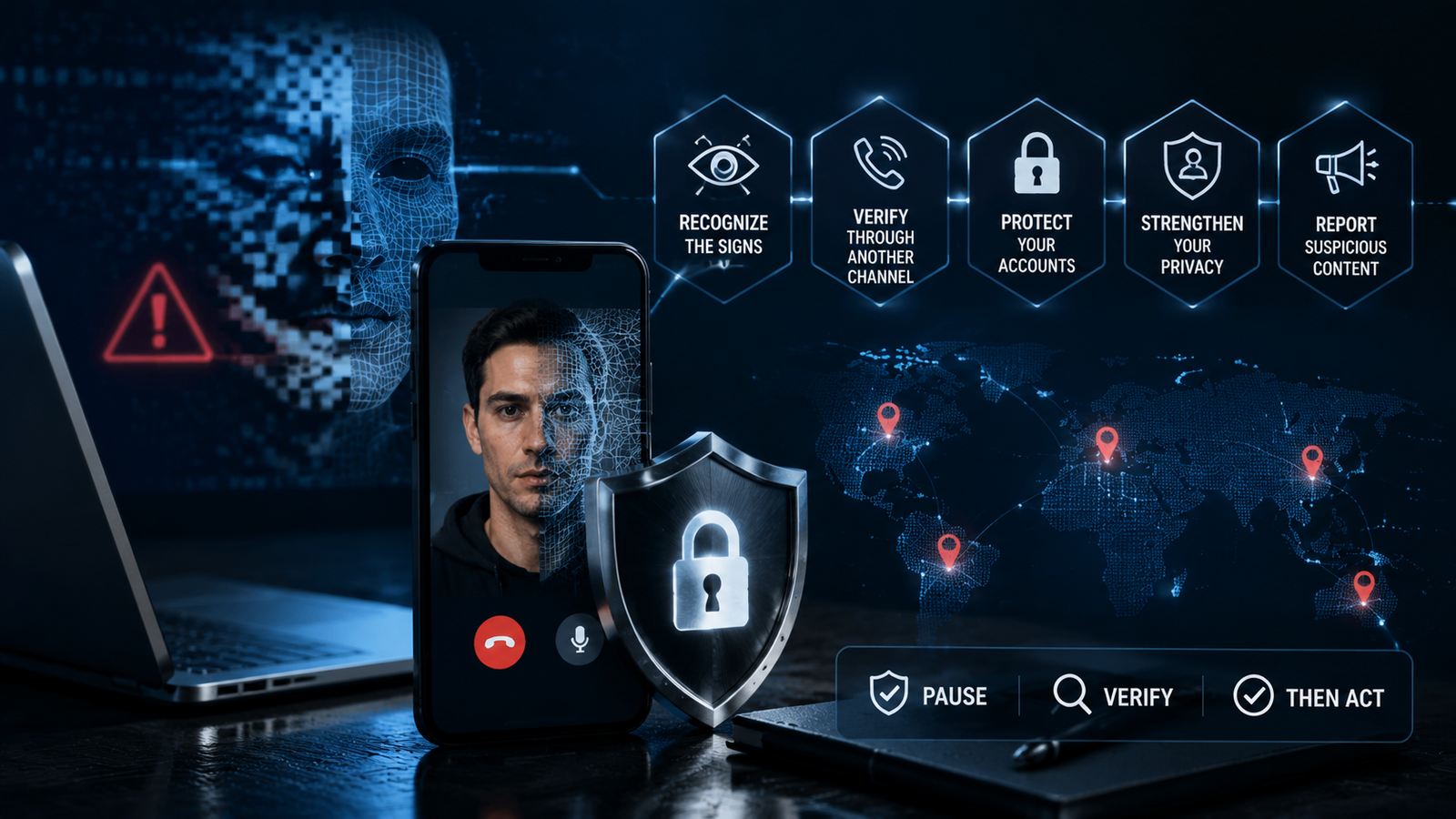
How to Protect Yourself from Deepfake Scams in 2026
Deepfake scams are getting harder to detect because they can copy voices, faces, and even speaking styles with surprising accuracy. That makes it more important than ever to understand how to protect yourself from deepfake attacks before they reach your inbox, phone, or social feed.
Deepfakes are no longer just a tech curiosity. They are now used in scams, identity fraud, misinformation, and impersonation attempts that can target individuals, families, and businesses. The good news is that a few smart habits can make a big difference.
Why Deepfakes Are Such a Serious Threat
Deepfakes work because they take advantage of trust. A fake video, voice note, or image can make a scam look real long enough for someone to act too quickly. In many cases, that is all the attacker needs.
The biggest risks usually include:
- Fake emergency calls from a “family member.”
- Voice clones asking for money or passwords.
- Fake executive messages sent to employees.
- False videos spreading misleading information.
These scams are effective because they create pressure. When people feel rushed, they often stop checking details, and that is exactly what scammers want.
Watch For Small Signs Something Feels Off
One of the best ways to protect yourself from deepfake content is to slow down and look for inconsistencies. Deepfakes are improving, but they still often leave tiny clues behind. A face may move unnaturally, a voice may sound slightly flat, or the lighting may not match the environment.
Common warning signs include:
- Lip movements that do not match the audio.
- Strange blinking or facial stiffness.
- Odd shadows or blurry edges.
- Voices that sound robotic, delayed, or too polished.
- Background details that look mismatched.
Even if a fake looks convincing at first glance, taking a closer look often exposes small mistakes. Training yourself to notice these details is a strong first line of defense.
Verify Requests Through A Second Channel
If someone sends you an urgent request, do not rely on the video or voice message alone. Always confirm the request through another trusted method before responding. A separate phone call, text message, or direct question can quickly reveal whether the contact is real.
This is especially important for requests involving:
- Money transfers.
- Password resets.
- Private documents.
- Emergency help.
- Business approvals.
For example, if a supposed manager asks for an urgent payment over voice message, call them back on a known number before taking action. That small step can stop a costly scam.
Strengthen Your Digital Privacy Settings
The more personal content you share publicly, the easier it becomes for scammers to build believable fake media. Public videos, voice clips, and personal photos can all be used as training material for deceptive content. That is why privacy settings matter more than many people realize.
To reduce exposure:
- Limit who can view your social media posts.
- Avoid posting private voice messages publicly.
- Review platform privacy settings regularly.
- Be cautious about sharing family details or travel plans.
- Remove old public content you no longer need.
If you want practical guidance on scam prevention, this deepfake scam safety guide is a useful related resource.
Use Strong Account Security Every Day
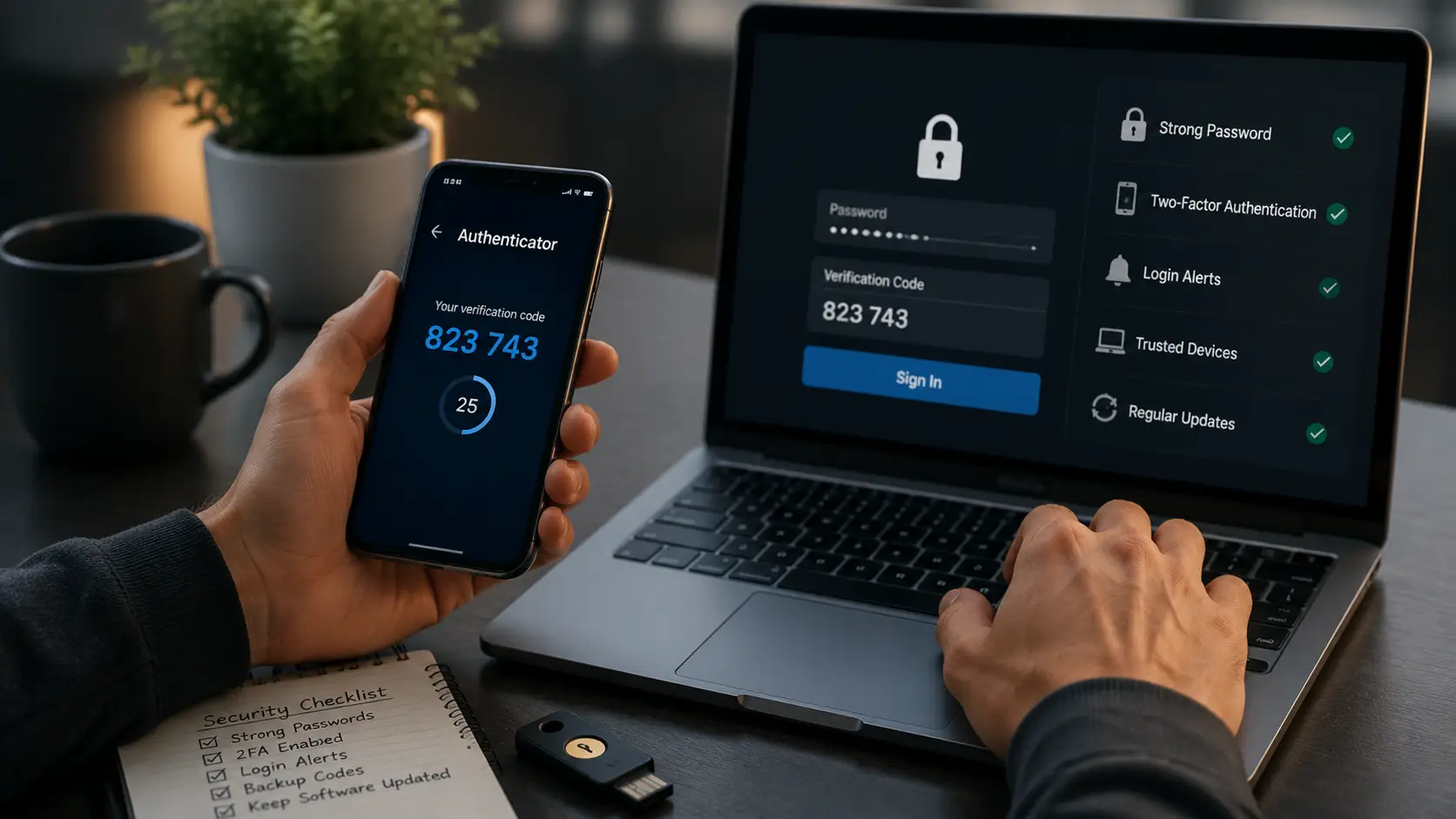
Deepfake scams become much more dangerous when they are combined with hacked accounts. If attackers can access your email, social apps, or cloud storage, they may be able to imitate you or manipulate others more easily. That is why account security should be treated as part of your deepfake protection plan.
Good habits include:
- Using unique passwords for every account.
- Turning on two-factor authentication.
- Updating apps and devices regularly.
- Reviewing login alerts and suspicious activity.
- Using a password manager for safer storage.
These steps may feel routine, but they create a strong barrier against impersonation attacks. A scammer who cannot reach your accounts has a much harder time making a fake message believable.
Build A Verification Habit At Work
Deepfake scams are especially dangerous in offices because they often target people who can move money or access sensitive information. A fake voice from a CEO, vendor, or client can create enough urgency to bypass normal checks. That is why workplaces should build verification into standard procedure.
A few smart workplace practices include:
- Requiring approval for payment changes.
- Confirming unusual requests by phone.
- Training staff to question emergency pressure.
- Using shared safe words for sensitive communications.
- Reporting suspicious content immediately.
If your organization handles finance, legal files, or customer records, this is not optional. Verification should be part of the workflow, not something people do only after a mistake.
Report Suspicious Content As Soon As Possible
If you find a deepfake using your face, voice, or name, report it quickly. The faster you act, the better the chance of limiting its spread. Start with the platform where the content appears, then save evidence in case you need to escalate it later.
Useful evidence includes:
- Screenshots.
- Links.
- Date and time.
- Usernames or account details.
- Any related messages or calls.
If you are dealing with a severe case, such as fraud or blackmail, contact the appropriate authorities or a legal professional. Fast reporting can prevent more people from falling for the same fake content.
Future Deepfake Risks To Expect
Deepfakes are likely to become more realistic and easier to generate in the coming years. Voice cloning, face swapping, and synthetic video may become even more common in scams and misinformation campaigns. That means users will need to depend less on “seeing” and more on verifying.
Trends to watch include:
- More realistic fake voices.
- Faster creation of synthetic videos.
- Deepfake scams targeting customers and employees.
- Better detection tools, but also better fake content.
- More pressure on companies to verify identity differently.
This is why knowing how to protect yourself from deepfake threats now is so important. The earlier you build safe habits, the easier it will be to stay ahead of the problem.
Final Safety Mindset
The safest approach is simple: pause, verify, and then act. Do not trust a request just because it sounds like someone you know or looks realistic on screen. Slow verification is still one of the most effective ways to protect yourself from deepfake scams.
For broader security guidance, the CISA deepfake threat sheet is a useful reference point.
FQAs About Deepfake Protection
How can I tell if a video is a deepfake?
Look for unnatural facial movement, mismatched audio, strange shadows, or visual glitches around the face.
What should I do if someone asks for money in a voice message?
Stop, verify the request using another trusted channel, and do not send money until you are sure.
Can privacy settings really help against deepfakes?
Yes. Limiting public photos, videos, and voice clips makes it harder for scammers to build convincing fakes.
What if my own image or voice is used in a fake?
Save evidence, report it to the platform, and contact legal or law enforcement help if the case is serious.
Are deepfake scams only a personal threat?
No. They also target businesses, executives, payroll teams, and customer support workflows.

- How to Add Captions to Short Videos That People Actually Read - October 8, 2026
- 10 Step AI Search Content Optimization Checklist - October 6, 2026
- Competitor Visibility Tracker: How to Monitor Search and AI Visibility - August 22, 2026