Best ChatGPT Rank Tracking Software for Smarter SEO Monitoring
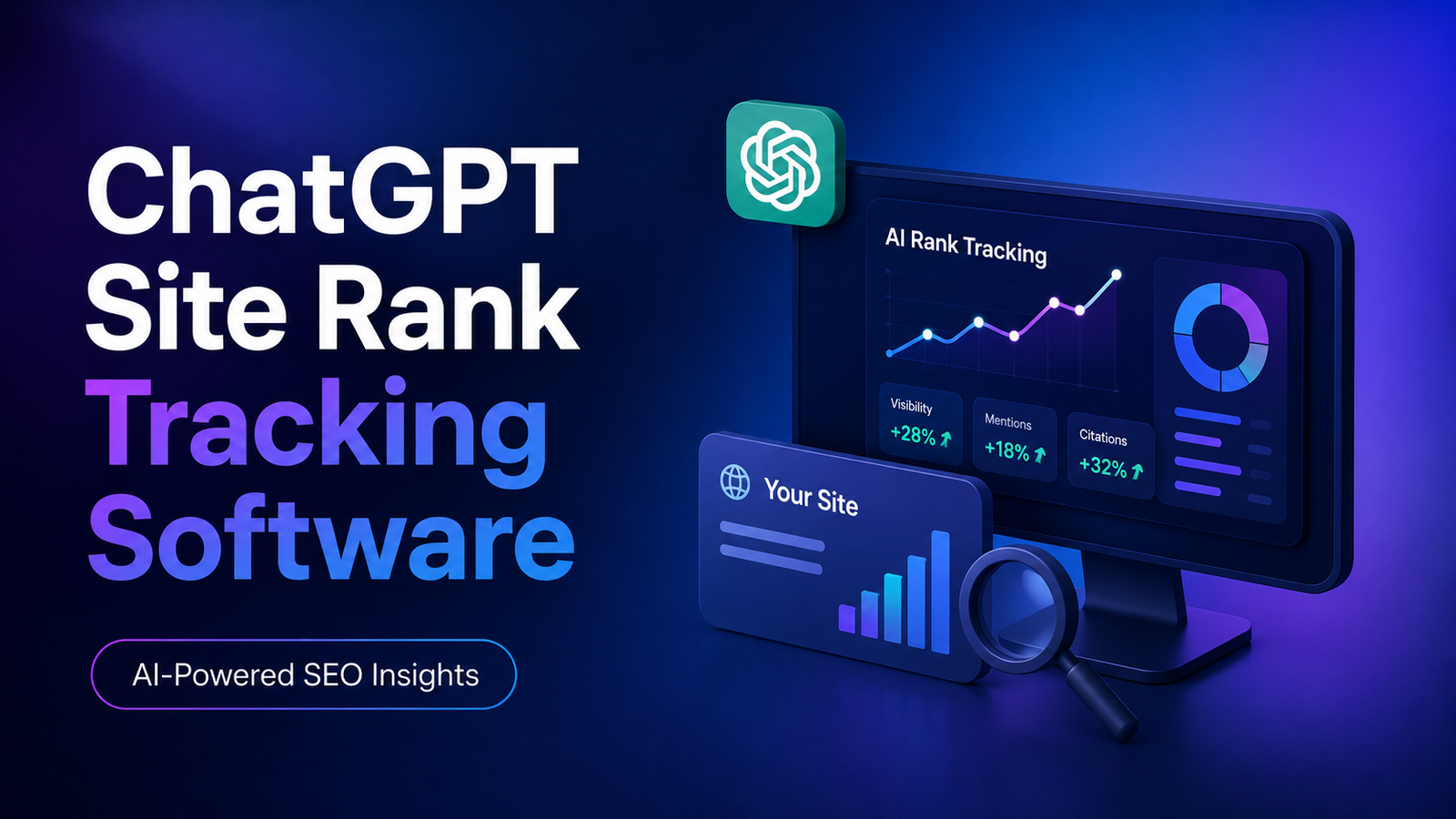
ChatGPT Site Rank Tracking Software helps SEO teams understand how their websites appear in AI-generated answers, alongside traditional search rankings. In 2026, SEO visibility is no longer limited to SERP positions. With AI-driven answers from ChatGPT, Gemini, and Google AI features reshaping how people discover information, traditional rank tracking alone may not provide the complete picture.
This creates a broader definition of search visibility. Instead of looking only at a keyword position, SEO teams can also examine which prompts mention their brand, which pages are cited, which competitors appear, and how those signals change over time. Used alongside traditional SEO data, ChatGPT tracking can help identify content gaps and opportunities that conventional rank tracking may miss.
What Is ChatGPT Rank Tracking Software?
ChatGPT rank tracking software monitors how a website, brand, product, or other entity appears in responses generated for selected prompts. Depending on the platform, the data may include brand mentions, source citations, competitor visibility, prompt-level results, and changes in visibility over time.
It is important to understand that ChatGPT does not work like a traditional Google results page. There is not one universal ranking position that applies to every response. The same prompt can produce different results depending on factors such as the model, location, context, timing, and the way the question is phrased.
For that reason, modern AI visibility platforms generally focus on measurable signals such as mentions, citations, visibility share, source usage, and prompt-level comparisons rather than treating AI answers exactly like conventional SERPs.
Why Traditional Rank Tracking Is Not Enough
Traditional rank tracking remains a core part of SEO. Platforms such as Semrush, Ahrefs, and Google Search Console help teams understand keyword rankings, organic performance, technical issues, and search demand.
However, traditional rankings cannot tell you everything about what happens inside an AI-generated response. For example, a page may rank well for a keyword but never be cited when users ask an AI system a related question. Conversely, a site may become visible in an AI answer even when its traditional ranking is not particularly strong.
AI search tracking can therefore add another layer of information, including:
- Which prompts mention your brand
- Which pages are cited as sources
- Which competitors appear in the same answers
- Which topics produce stronger or weaker visibility
- How AI visibility changes after content updates
The goal is not to replace traditional SEO measurement. It is to understand another part of how people may discover information about your business.
How ChatGPT Site Rank Tracking Software Works
ChatGPT tracking changes the questions an SEO team can ask. Instead of measuring only whether a page ranks for a keyword, teams can investigate whether their content is being used when AI systems answer related questions.
For example, an SEO team might monitor prompts such as “best AI tools for SEO,” “best ChatGPT rank tracker,” or “how can businesses monitor AI search visibility.” The results can reveal which brands are mentioned, which sources are cited, and which competitors appear consistently.
That information can then inform content decisions. If competitors are repeatedly cited for a topic while your website is absent, the problem may be related to content depth, topical coverage, authority, or the usefulness of the existing page. The tracking data does not automatically solve the problem, but it can show where further investigation is worthwhile.
What to Look for in ChatGPT Rank Tracking Tools
The best tool depends on the size of your website and the type of AI visibility you want to measure. Useful capabilities include:
- Prompt tracking: Create and monitor questions that reflect real customer searches.
- Brand mention tracking: See when your business appears in AI-generated responses.
- Citation tracking: Identify which URLs are being used as supporting sources.
- Competitor monitoring: Compare your visibility with competing brands.
- Historical reporting: Measure changes after content or SEO updates.
- Multi-platform monitoring: Track ChatGPT alongside other AI search experiences where supported.
- Actionable insights: Turn visibility data into content, technical, or authority-building priorities.
It is also worth checking how a platform collects its data. AI responses can vary, so the methodology behind prompt tracking matters when comparing results from different tools.
Best ChatGPT Rank Tracking Tools to Consider
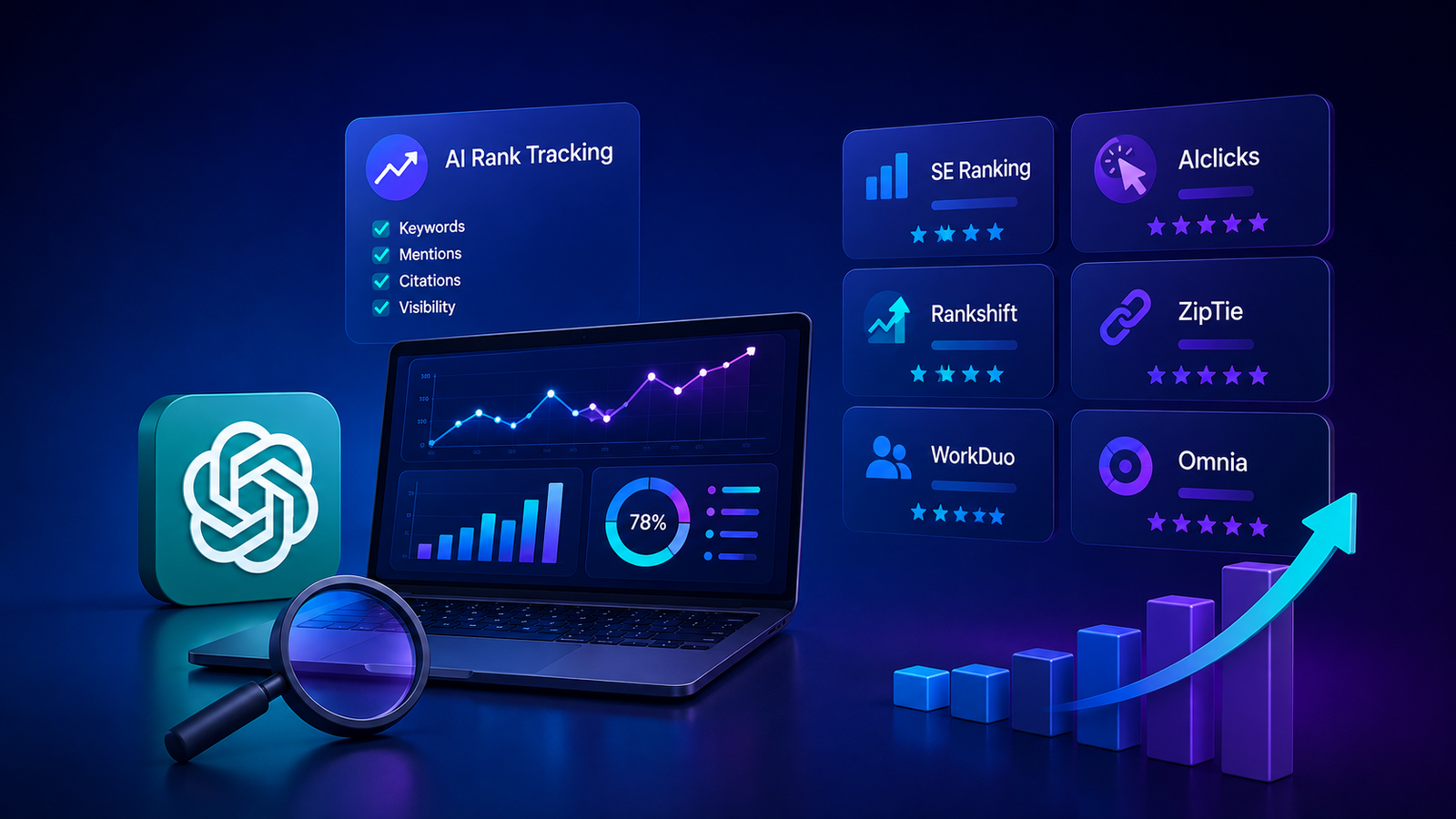
There is no single best platform for every SEO team. The following tools represent different approaches to AI visibility monitoring and should be evaluated according to their current features, coverage, methodology, and pricing.
1. SE Ranking AI Search Tools
SE Ranking combines traditional SEO functionality with AI search monitoring. Its AI Search tools support tracking across platforms including ChatGPT, Gemini, Perplexity, Google AI Overviews, and Google AI Mode. Users can configure prompts and competitors and monitor AI visibility alongside their existing SEO workflow.
Best for: SEO teams and agencies that want conventional rank tracking and AI visibility measurement in one ecosystem.
2. AIclicks
AIclicks provides a dedicated ChatGPT visibility tracker that monitors brand mentions, citation positions, competitor visibility, and prompt-level results. Its current offering also includes a free starting option with daily tracking for a defined prompt set.
Best for: Teams that want a focused ChatGPT visibility workflow without starting with a large traditional SEO platform.
3. Rankshift
Rankshift focuses on prompt tracking across multiple AI platforms, including ChatGPT, Gemini, Google AI Overviews, Google AI Mode, Claude, and Perplexity. Its feature set includes visibility measurement, competitor benchmarking, citation analysis, sentiment analysis, and historical monitoring.
Best for: Agencies and marketing teams that need broader AI visibility monitoring rather than ChatGPT-only tracking.
4. ZipTie
ZipTie takes a more optimization-focused approach to AI search. Its platform can monitor AI visibility and identify opportunities involving citations and brand mentions. It also offers content optimization features designed to identify gaps that may affect AI search performance.
Best for: Technical SEO teams and businesses that want to connect AI visibility data with content optimization.
How to Choose the Right ChatGPT Rank Tracker
Start with the questions you actually need the platform to answer. If your priority is ChatGPT visibility, look for reliable prompt-level tracking and citation data. If you manage several AI search channels, prioritize platforms with broader model coverage.
Also consider the size of your prompt set, competitor monitoring requirements, reporting needs, historical data, integrations, and data collection methodology. A small website may not need an expensive enterprise platform, while an agency managing many clients may quickly outgrow a basic tracker.
Do not choose a tool simply because it reports a large number of AI metrics. The more important question is whether those metrics help you make better SEO and content decisions.
Free vs Paid ChatGPT Rank Tracking Tools
Free or trial-based ChatGPT Site Rank Tracking Software can be useful for understanding how a small set of important prompts performs. It is particularly useful when you are testing whether AI visibility monitoring adds value to your existing SEO workflow.
Paid platforms generally become more useful when you need larger prompt sets, recurring monitoring, competitor comparisons, historical reporting, multiple websites, or broader AI-platform coverage.
Before paying for a platform, calculate how many prompts, brands, competitors, AI models, and monitoring cycles you actually need. Pricing and limits can change, so check the provider’s current plan information before making a purchasing decision.
How to Use ChatGPT Rank Tracking Data Effectively
Tracking alone does not improve visibility. The value comes from turning the results into a repeatable SEO process. For a more detailed workflow, see our guide on how to track ChatGPT rankings over time.
- Choose important prompts. Start with questions that reflect your customers, products, services, and commercial topics.
- Establish a baseline. Record your current mentions, citations, competitors, and visible sources.
- Find visibility gaps. Identify queries where competitors appear consistently but your site does not.
- Review the cited sources. Study the pages AI systems are using and look for meaningful differences in depth, evidence, clarity, and authority.
- Improve your content. Update existing pages when they have relevant expertise but lack useful coverage or clarity.
- Monitor the results. Recheck important prompts after meaningful content or SEO changes.
This process makes AI visibility tracking part of normal SEO rather than treating it as a separate experiment.
ChatGPT Rank Tracking vs Traditional SEO
Traditional SEO and AI search monitoring measure different aspects of visibility. Traditional SEO focuses heavily on rankings, impressions, clicks, technical performance, and organic traffic. AI search monitoring focuses more on how brands and sources appear inside generated answers.
The two approaches should therefore work together. Google also states that the same foundational SEO practices remain relevant for AI Overviews and AI Mode, with no additional technical requirements or special AI markup needed for eligibility.
That means businesses should continue investing in crawlability, indexing, helpful content, internal linking, structured data that matches visible content, and overall search quality while using AI visibility tracking as an additional measurement layer.
Common ChatGPT Rank Tracking Mistakes
- Tracking hundreds of irrelevant prompts instead of a focused set of valuable questions
- Assuming an AI response has a fixed ranking position like a Google SERP
- Judging success from mentions alone without checking citations or source quality
- Ignoring traditional SEO fundamentals
- Changing content after every small fluctuation in an AI response
- Trusting tool data without understanding its collection methodology
- Using AI tracking without connecting the results to actual content decisions
Is ChatGPT Rank Tracking Software Worth It?
For businesses that depend on organic discovery, AI search monitoring can be a useful addition to an established SEO process. It provides information that traditional keyword tracking cannot fully capture, particularly around brand mentions, citations, competitors, and prompt-level visibility.
However, it should not be treated as a replacement for Google Search Console, traditional rank tracking, technical SEO, content quality, or authority building. The strongest approach combines these sources of information and uses each one for the job it is designed to perform.
For broader AI visibility, you can also explore our guide to AI Mode rank tracking software and our resources on AI search monitoring. These related guides can help build a more complete measurement framework across different AI search experiences.
Frequently Asked Questions
What does ChatGPT rank tracking software do?
It monitors how a website or brand appears in responses to selected ChatGPT prompts, including signals such as mentions, citations, competitor visibility, and changes over time.
Is ChatGPT rank tracking the same as Google rank tracking?
No. Google rank tracking generally measures a page’s position for a search query, while ChatGPT tracking examines how a brand or source appears within generated responses. The underlying systems and measurements are different.
What is the best ChatGPT rank tracker?
The best option depends on your requirements. Consider prompt coverage, citation tracking, competitor monitoring, supported AI platforms, historical reporting, integrations, methodology, and pricing before choosing a tool.
Can ChatGPT rank tracking replace traditional SEO tools?
No. AI visibility tracking should complement traditional SEO platforms and Google Search Console rather than replace them. Technical SEO, indexing, content quality, links, rankings, and organic traffic remain important.
How many prompts should I track?
Start with a focused set of commercially or strategically important questions. A smaller set of relevant prompts is generally more useful than a large collection of unrelated queries because it makes trends easier to interpret and act on.
How often should I monitor ChatGPT visibility?
Weekly monitoring can be sufficient for many websites, while competitive businesses may benefit from more frequent checks. The appropriate frequency depends on how quickly your market and content change.
Final Thoughts
ChatGPT rank tracking is becoming a useful extension of modern SEO measurement, particularly for businesses that want to understand how their brands and content appear in AI-generated answers. The strongest strategy is not to abandon traditional rankings, but to combine them with AI visibility signals such as mentions, citations, competitor presence, and prompt-level trends.
Use those signals to identify genuine content opportunities, improve pages that deserve greater visibility, and measure the effect of meaningful SEO changes. That approach keeps AI search monitoring grounded in the same principle as good SEO: create useful, trustworthy content for people first, then use reliable data to understand where that content can perform better.

- How to Add Captions to Short Videos That People Actually Read - October 8, 2026
- 10 Step AI Search Content Optimization Checklist - October 6, 2026
- Competitor Visibility Tracker: How to Monitor Search and AI Visibility - August 22, 2026