AI Blog Post Generator: Fast Content Creation
An AI blog post generator simplifies content creation for bloggers and marketers. These tools use artificial intelligence to produce drafts quickly based on user inputs.
What Is an AI Blog Post Generator?
An AI blog post generator is a software tool powered by artificial intelligence. It creates written content, such as blog articles, from simple prompts like topics or keywords. These tools have evolved significantly, drawing from advanced large language models that process vast datasets to understand context, structure, and reader intent, making them indispensable for modern content workflows.
These AI writing tools analyze vast amounts of data to mimic human-like text. Users provide context, such as target audience, desired tone, or specific length requirements, and the tool generates structured posts ready for editing and personalization. This process ensures the output aligns with professional standards, incorporating elements like engaging introductions, logical body sections, and compelling conclusions, all while maintaining readability and flow that keeps readers hooked from start to finish.
Unlike basic chatbots, dedicated generators focus on blog formats. They handle outlines, headings, subheadings, SEO elements, and even transitional phrases to streamline the entire process. In practice, this means bloggers can input a niche-specific prompt say, sustainable gardening tips for urban dwellers and receive a fully formatted draft complete with H2 tags, bullet points where appropriate, and keyword-optimized phrasing that supports search engine performance without feeling forced or unnatural.
How an AI Blog Post Generator Works
AI blog post generators rely on natural language processing (NLP) and machine learning models. They process user inputs to understand tone, style, intent, and even subtle nuances like humor or formality, breaking down complex requests into coherent, layered structures. These models, often built on transformer architectures similar to those powering leading AI systems, excel at predicting not just individual words but entire paragraphs that maintain thematic consistency throughout.
The process starts with entering a topic and keywords. The AI then builds an outline with detailed section breakdowns, followed by full drafts incorporating relevant sections, smooth transitions, logical arguments, and supporting examples. For instance, if prompted with benefits of remote work, it might generate an intro hooking the reader with statistics, outline productivity gains, work-life balance, and challenges, then flesh each out with real-world analogies and data-backed insights, all tailored to the specified word count.
Advanced models generate context-aware content by referencing patterns from diverse online sources. Outputs often include optimized phrasing for readability, scannable formatting, and calls-to-action, with recent enhancements emphasizing style imitation from user history or uploaded samples. This iterative refinement where users tweak prompts for regenerations allows for hyper-personalized results, such as adapting to a brand’s conversational voice or industry jargon, ensuring the content feels authentic and ready for minimal polishing before publication.
Key Features That Make AI Blog Post Generators Useful
Modern AI content generators offer practical tools for efficiency. Core features include customizable tone, SEO keyword integration, and real-time editing previews, allowing seamless adaptation to brand guidelines and audience preferences.
- Outline generation for structured posts saves hours of planning time
- Tone adjustment (formal, casual, persuasive) matches brand voice precisely across sections
- Keyword placement suggestions improve search engine visibility naturally without stuffing
- Multi-language support expands global reach effortlessly for international audiences
- Plagiarism checks, readability scores, and image integration ensure polished, original work
- Seamless WordPress or CMS integration enables direct publishing with one click
Recent updates now feature document-aware generation, where tools analyze uploaded files for style consistency, producing hyper-personalized outputs based on past content analysis, along with automated meta tags and schema markup. Features like live fact-checking against web data and collaborative editing modes further elevate utility, turning these generators into comprehensive content suites. In addition, many creators experiment with AI writing assistant tools such as HyperWrite to enhance idea generation, sentence flow, and drafting efficiency across different content formats.
Why Bloggers and Marketers Use AI Blog Post Generators
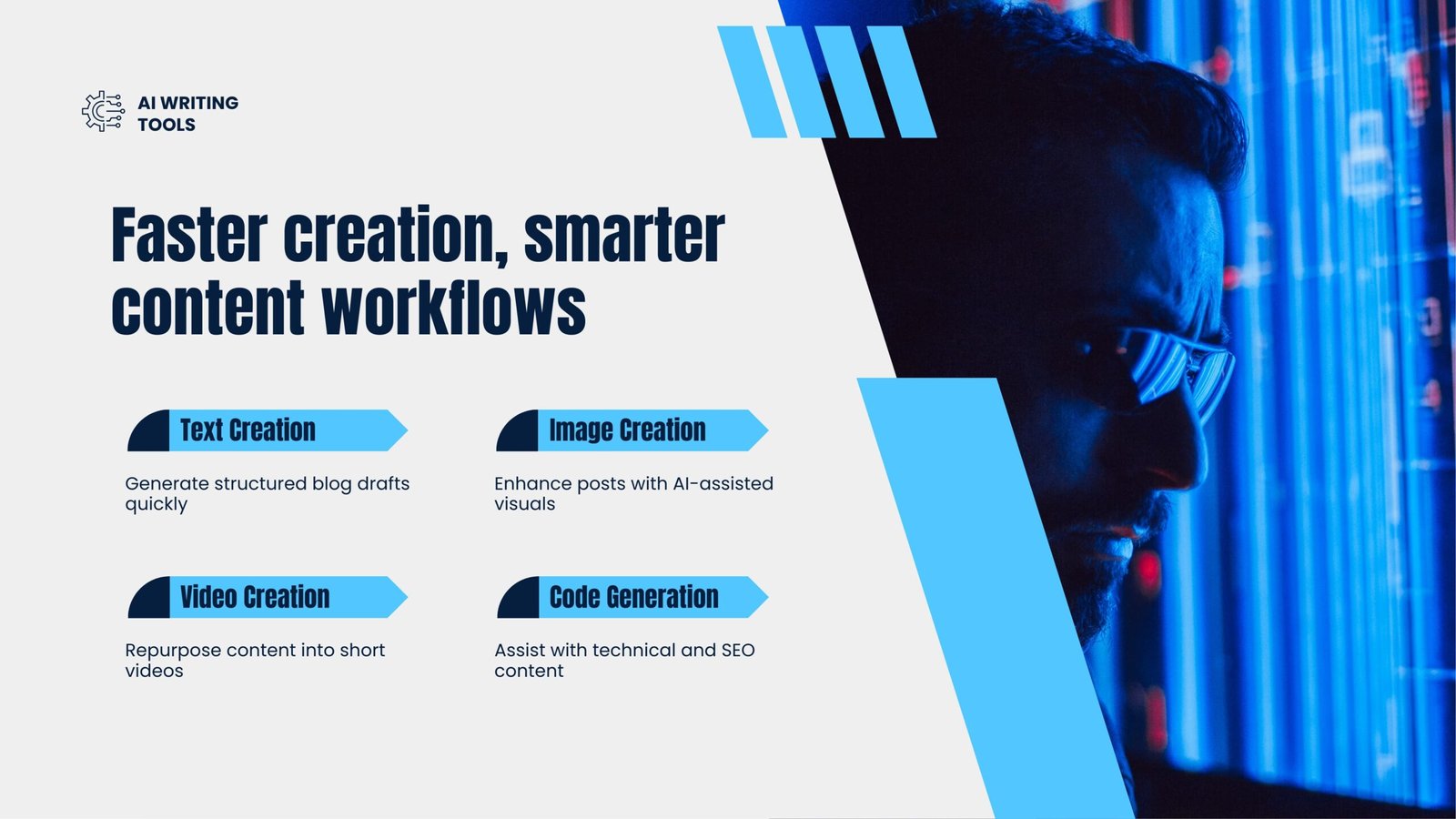
Bloggers turn to these tools to overcome writer’s block and meet tight deadlines. They provide quick starting points for high-volume content needs, transforming vague concepts into detailed drafts that capture voice and vision.
Marketers value the time savings for campaigns across channels. AI handles repetitive drafting of product updates, email newsletters, or landing pages, freeing humans for high-level strategy, audience segmentation, and performance analysis.
Consistent output maintains posting schedules reliably. This supports sustained traffic growth, improved domain authority, and audience retention without the burnout associated with manual writing marathons.
Common Use Cases of an AI Blog Post Generator
Content teams use generators for idea brainstorming. Input keywords, and get topic suggestions tailored to niches, complete with angle variations and trending hooks to spark high-engagement ideas.
- Ecommerce sites create product guides or how-tos efficiently, detailing features, benefits, and comparisons to drive conversions
- Travel blogs draft destination overviews with vivid details on itineraries, hidden gems, and practical tips to inspire bookings
- News aggregators summarize trends into engaging posts, condensing complex events into digestible narratives with key takeaways
- Agencies produce client reports or social media tie-ins quickly, customizing for industries like finance or healthcare
For more on AI in content, see our AI Tools for SEO guide.
Limitations You Should Know Before Using AI Blog Post Generators
AI outputs may lack deep originality or nuanced storytelling. Fact-checking is essential, as models can hallucinate details from incomplete training data, leading to inaccuracies in specialized topics.
Creative depth often needs human refinement for emotional resonance. Over-reliance risks generic content that search engines penalize for lacking strong E-E-A-T signals Experience, Expertise, Authoritativeness, and Trustworthiness.
Technical limits include token caps on free plans, restricting epic-length guides. Integration issues arise with legacy platforms, and output variety can plateau without diverse prompts. Tools such as an AI blog writing tool can improve clarity and structure, but they still require human review to ensure accuracy, originality, and consistent quality.
How to Choose the Right AI Blog Post Generator
Evaluate tools based on ease of use and output quality across test prompts. Prioritize interfaces that feel intuitive from the first login, with drag-and-drop editors and preview modes.
Consider pricing tiers, word limits per generation, and support features like 24/7 chat. Check integration with tools like WordPress, Google Docs, or Zapier for workflow harmony.
Prioritize those with strong NLP for natural, varied text. Read user reviews for long-term reliability, uptime stats, and update frequency.
Explore Top AI Apps for iPhone for mobile options.
Top AI Blog Post Generators to Explore
Several tools stand out for their performance in 2026. Options range from free tiers to enterprise solutions.
- Junia AI excels in SEO-focused outlines and fast ranking potential
- AIOSEO offers strong WordPress integration and SEO optimization tools
- Eesel AI supports bulk content needs with customizable workflows
- Article Forge delivers high-quality, research-backed drafts efficiently
Each tool brings unique strengths to match different blogging workflows.
Final Thoughts on Using AI Blog Post Generators
AI blog post generators transform workflows for steady content production. They excel as assistants, not replacements. Blend them with human edits for authentic results. Experiment to find your fit.
Keep their answers medium in size, don’t make them too long.
FAQs: AI Blog Post Generator
1. What exactly is an AI blog post generator?
An AI blog post generator is a tool that uses artificial intelligence to create complete blog articles from simple inputs like topics or keywords. It handles structure, tone, and basic SEO, producing editable drafts.
2. How accurate is content from AI blog post generators?
Accuracy depends on the tool and prompt. Outputs draw from training data but may include errors or hallucinations. Always fact-check and edit for reliability.
3. Are AI blog post generators safe for SEO and Google rankings?
Yes, when edited for originality. Google rewards helpful content with E-E-A-T. Add unique insights to avoid penalties for generic AI text.
4. Can beginners use an AI blog post generator effectively?
Yes, most have intuitive interfaces. Use clear prompts for tone and length, then refine outputs to create professional posts quickly.

Through TechlsPro, he publishes well-researched guides, technology news, and helpful tutorials that keep readers informed about the latest innovations in the digital world and help them make smarter technology decisions.
- Best AI Photo Editor Tools in 2026: Transform Your Images with Smart Editing - April 2, 2026
- The Rise of the Best AI Mode Rank Tracker Tool in 2026 SEO - April 1, 2026
- How to Track ChatGPT Rankings Over Time - April 1, 2026