AI Chatbot Development Tools: 6 Developer Platforms Worth Building With in 2026
AI chatbot development tools have evolved faster in the past eighteen months than in the previous five years combined. Where chatbot building once meant choosing between a handful of similar rule-based platforms, developers in 2026 now choose between LLM-native agent studios, API-first frameworks, open-source NLU engines, and enterprise-grade conversational platforms each built on fundamentally different architecture. This guide breaks down six AI chatbot development tools that developers are actually building with right now, what sets each apart, and how to match the right one to your project instead of chasing whichever name is trending.
Why AI Chatbot Development Tools Look Completely Different in 2026
The biggest shift across AI chatbot development tools has been the move from scripted decision trees to LLM-native reasoning. Older platforms relied on rigid intent-matching and predefined conversation paths. The current generation of AI chatbot development tools instead lets the model itself handle reasoning, meaning bots can hold multi-turn conversations, call external tools, and adapt mid-conversation without a developer pre-mapping every possible branch.
This shift matters because it changes what you should actually evaluate when comparing platforms. The question isn’t simply “can it build a chatbot” it’s whether the AI chatbot development tools you’re considering support agentic reasoning, multi-model flexibility, and real integration depth out of the box.
1. Botpress The LLM-Native Agent Platform
Botpress has become one of the most-watched names among AI chatbot development tools because of how completely it has rebuilt itself around agentic architecture. What began as an open-source Node.js chatbot framework is now a full agent platform combining a visual Agent Studio with an Autonomous Engine that uses LLM reasoning to guide conversations rather than relying on fixed flowcharts. Developers can bring their own API key and choose between providers including OpenAI, Anthropic, and Groq, and a code-first ADK CLI lets engineering teams build agents programmatically alongside the visual builder.
Pricing on Botpress now bills AI model usage separately from the base subscription, with a free pay-as-you-go tier covering light experimentation and paid plans scaling into enterprise territory for production workloads. You can review current plans and architecture details on the official Botpress platform.
2. OpenAI’s Responses API API-First Development for Full Control
For developers who want to own every layer of the stack without a visual builder in the way, OpenAI’s API remains one of the most flexible AI chatbot development tools available. The platform supports persistent conversation threads, file search through vector retrieval, a code interpreter sandbox, and function calling for connecting to external systems all without a dashboard dictating your architecture. The newer Responses API is also agentic by default, meaning a single request can chain multiple tool calls together, including web search, file search, and custom functions, without manual orchestration.
One detail developers need to account for right now: OpenAI has been steadily moving the platform away from its older Chat Completions and Assistants patterns. Any new project built on this category of AI chatbot development tools should target the official Responses API migration guide, which outlines the architectural differences, stateful conversation handling, and built-in tool support that the older endpoints never had.
3. Rasa Open-Source Control Without Vendor Lock-In
Among open-source AI chatbot development tools, Rasa remains the most established choice for developers who want full ownership of their NLU pipeline and dialogue management. Unlike hosted platforms, Rasa runs on your own infrastructure, which means no vendor can deprecate your core chatbot logic overnight a meaningful advantage given how often hosted API providers have shifted direction this year.
The tradeoff is implementation time. Open-source AI chatbot development tools like Rasa demand considerably more engineering investment upfront than a managed platform, but for teams building conversational logic that’s central to their product, that investment buys long-term architectural independence.
4. Voiceflow Built for Teams That Need Both Structure and Flexibility
Voiceflow sits in an interesting middle position among AI chatbot development tools, designed for teams where designers, product managers, and developers collaborate on the same conversational build. It separates conversation logic into two primitives: deterministic workflows for tasks that must execute correctly every time, and goal-driven playbooks that give the agent room to reason with the ability for a workflow to hand off mid-conversation to a playbook and back again.
Voiceflow is also model-agnostic, letting developers choose between OpenAI, Anthropic, Google, Bedrock, or Groq per agent rather than locking into a single provider a meaningful differentiator among AI chatbot development tools for teams wary of model lock-in. Native voice and phone support ships standard, alongside a knowledge base and observability suite for tracing live conversations.
5. Dialogflow / CX Agent Studio Enterprise-Grade Multilingual Infrastructure
For organizations that need governance, compliance, and multilingual support at scale, Google’s conversational AI stack remains one of the most capable enterprise AI chatbot development tools on the market. The platform restructured significantly this year: Dialogflow CX became “Flows,” a sub-component within a broader offering, while CX Agent Studio launched as a distinct, Gemini-powered service inside the Gemini Enterprise for Customer Experience umbrella providing a visual interface to build, evaluate, deploy, and monitor multimodal agents across more than 40 languages.
This tier of AI chatbot development tools makes the most sense for large support operations and regulated industries that need audit trails and compliance features most smaller teams simply don’t require.
6. Chatbase No-Code Speed for Fast Deployment
Not every project needs a developer at the helm, and Chatbase represents the no-code end of the AI chatbot development tools spectrum. It builds context-aware conversational bots without writing code, using AI that interprets user intent and responds naturally making it a practical choice for teams that need a working chatbot live quickly without dedicating engineering resources to the build.
While it trades some architectural depth for speed, Chatbase is often the right call for support bots, FAQ assistants, and lead-capture flows where the conversation logic doesn’t need to be deeply custom.
Pairing Your Chatbot With a Workflow Automation Layer
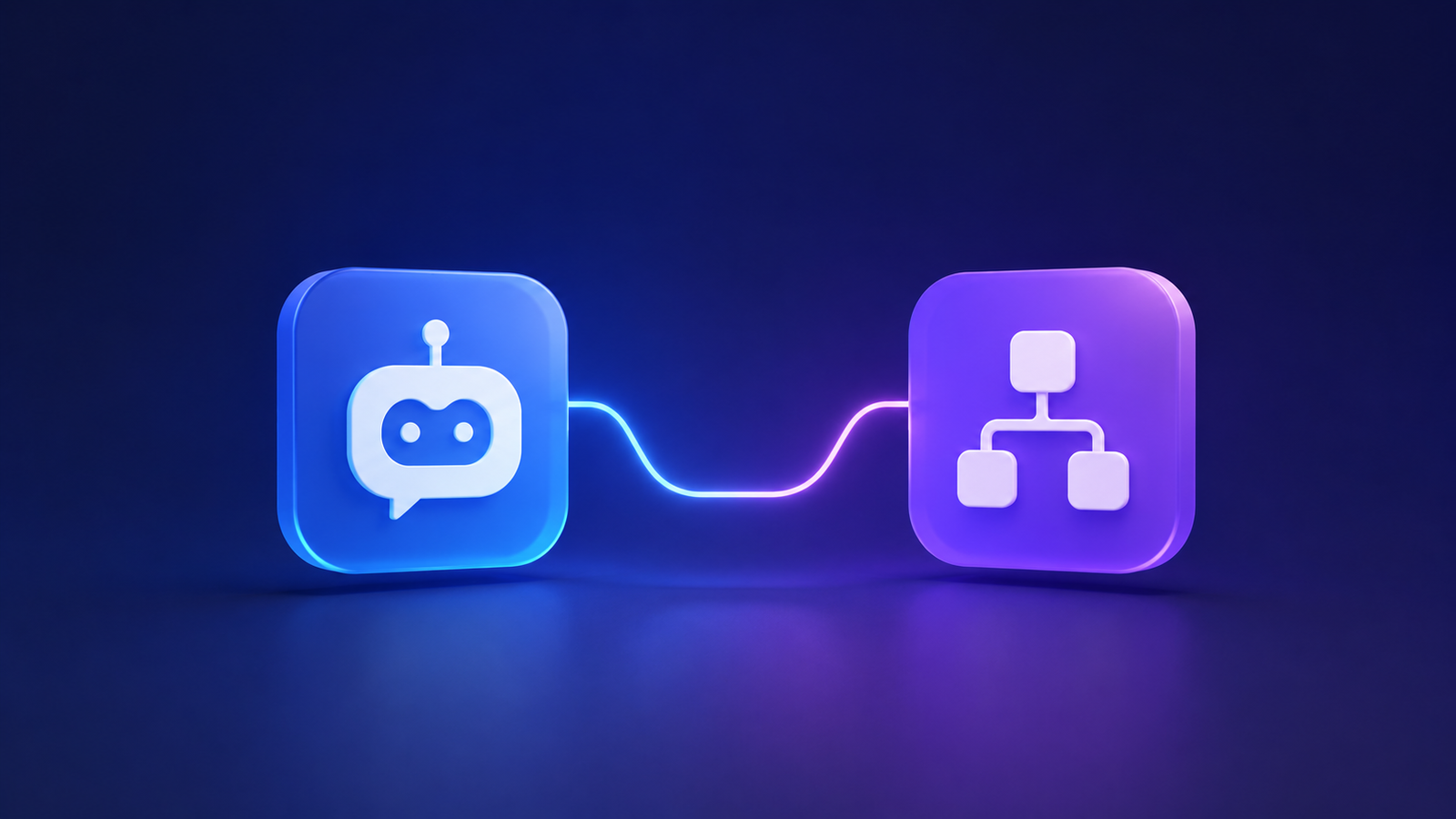
A chatbot rarely operates in isolation it usually needs to trigger actions, pull data, or hand off to other systems. Pairing a conversational design platform with a workflow automation tool like n8n has become a popular pattern among teams using modern AI chatbot development tools, letting developers connect a chatbot directly into real business processes without building every integration from scratch.
This layered approach a conversation engine plus an automation layer is increasingly how mid-sized teams architect their AI chatbot development tools stack instead of relying on one platform to handle both design and backend logic.
How to Choose the Right Tool for Your Project
The biggest mistake teams make when evaluating AI chatbot development tools is choosing based on hype rather than fit. A two-person startup rarely needs Dialogflow’s enterprise multilingual infrastructure. A regulated enterprise shouldn’t be wiring together no-code tools with no audit trail. Before comparing specific platforms, map out your team’s technical depth, expected conversation volume, integration requirements, and compliance needs the right choice among today’s AI chatbot development tools becomes far more obvious once those constraints are clear.
If your priority is specifically chatbots built to drive and capture website traffic rather than handle support tickets, this AI chatbot traffic tool guide covers platforms built around that exact use case.
Final Analysis
These six AI chatbot development tools Botpress, OpenAI’s Responses API, Rasa, Voiceflow, Dialogflow’s CX Agent Studio, and Chatbase represent the clearest cross-section of where the category stands in 2026. Each serves a genuinely different kind of project: agentic reasoning, raw API control, open-source independence, collaborative team building, enterprise compliance, or rapid no-code deployment. With major providers actively reshaping their core APIs and shifting toward agent-native architecture, the smartest move for any developer evaluating AI chatbot development tools right now is choosing a platform built for where the industry is heading, not where it used to be.
Reader Queries
Which of these AI chatbot development tools is best for a solo developer?
Chatbase or Voiceflow tend to be the most accessible starting points, since both offer fast setup without requiring a full engineering team. For solo developers who want deeper architectural control, OpenAI’s Responses API is also a strong option once you’re comfortable building your own interface layer.
Do I need to commit to a single LLM provider when using these tools?
Not with every platform. Voiceflow and Botpress both support multiple model providers, including OpenAI, Anthropic, and Google, reducing the risk of being locked into a single vendor’s pricing or roadmap decisions.
Is open-source always the safer long-term choice among AI chatbot development tools?
It reduces vendor dependency risk, but it also shifts more engineering burden onto your team. Rasa offers genuine architectural independence, but hosted platforms like Botpress or Voiceflow typically get you to production faster if rapid deployment matters more than full infrastructure ownership.
How do these AI chatbot development tools handle pricing as usage scales?
Most have moved to usage-based models where the base subscription is billed separately from underlying AI model costs. Botpress, for example, now bills AI spend on top of its base plan. Always model your expected conversation volume for the next six to twelve months before committing, since per-message or per-session costs compound quickly at scale.

- How to Add Captions to Short Videos That People Actually Read - October 8, 2026
- 10 Step AI Search Content Optimization Checklist - October 6, 2026
- Competitor Visibility Tracker: How to Monitor Search and AI Visibility - August 22, 2026









Pingback: Agentic AI Tools List: 3 Categories Explained With Verified Picks For 2026
Pingback: AI Tools For Automating Python Data Analysis Pipelines: A Practical Stack Guide